
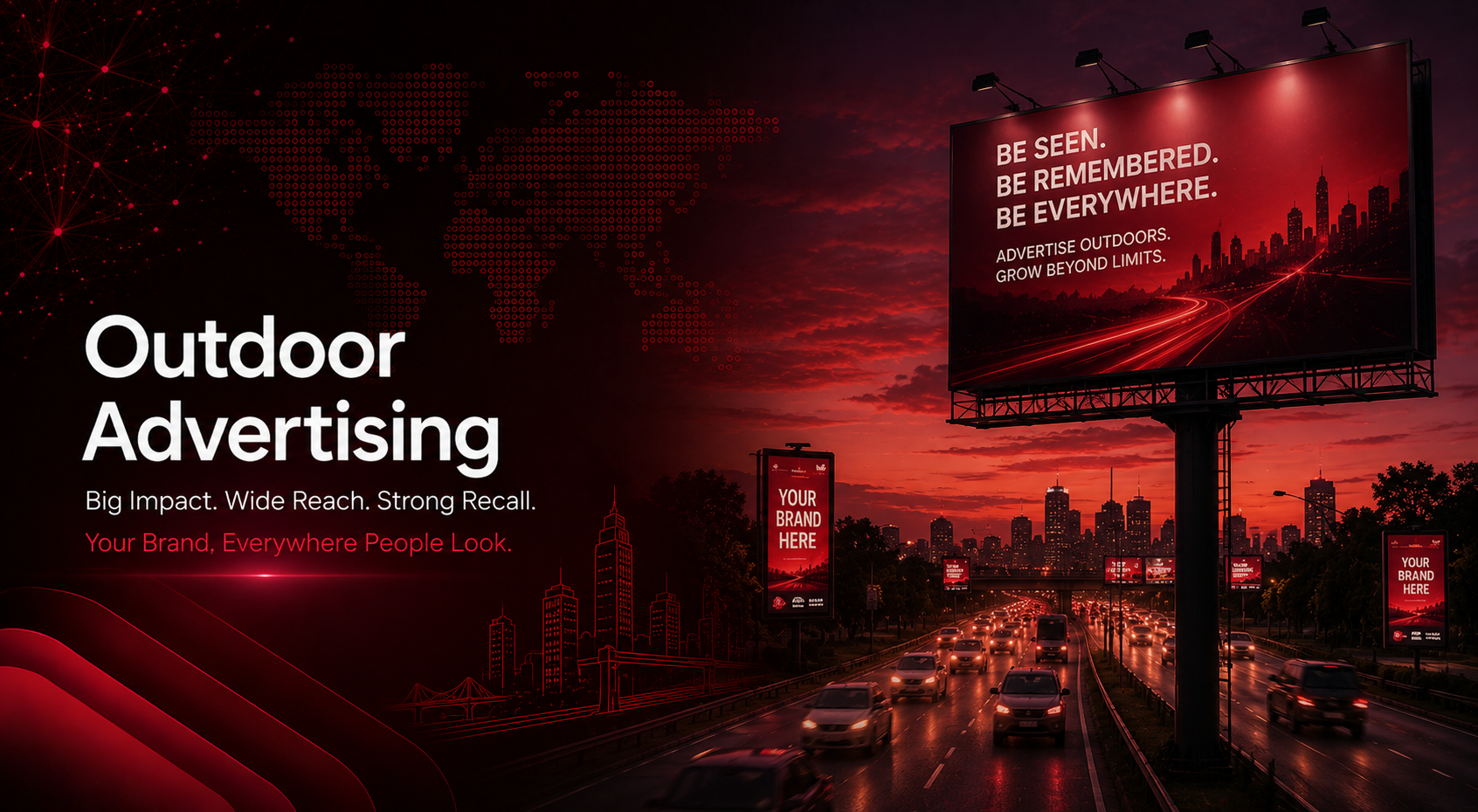
Outdoor Advertising Guide: Everything You Need to Know
Outdoor advertising is one of the oldest yet most influential forms of marketing, enabling brands to connect with consumers through strategically placed advertisements in public spaces. From billboards and transit media to airports, metro stations, malls, digital screens, and street furniture, outdoor advertising offers continuous visibility where people live, work, travel, and shop. As audiences spend more time outside their homes, Out-of-Home (OOH) advertising continues to play a vital role in building brand awareness, strengthening recall, and reaching consumers at scale.
This Outdoor Advertising Guide provides a comprehensive understanding of how outdoor advertising works, the different media options available, campaign planning strategies, industry trends, pricing factors, and best practices for successful execution. Whether you are a startup exploring outdoor branding for the first time or an established business planning a multi-city campaign, this guide will help you understand the key aspects of planning and managing effective outdoor advertising campaigns.
In addition to explaining outdoor advertising formats and their applications, this guide also addresses practical considerations such as selecting the right advertising medium, choosing a reliable outdoor advertising agency, campaign monitoring, execution transparency, and measuring campaign performance. By understanding these aspects, advertisers can make informed decisions, minimise execution challenges, and maximise the value of their outdoor advertising investment.
What is Outdoor Advertising?
Outdoor Advertising, also known as Out-of-Home (OOH) Advertising, is a form of advertising that reaches consumers through media placed in public locations outside their homes. It includes a wide range of advertising formats such as billboards, transit media, metro advertising, airport advertising, mall branding, digital screens, bus shelters, street furniture, and other high-visibility media installed across cities and transportation networks. The primary objective of outdoor advertising is to deliver consistent brand exposure to large audiences during their daily commute, travel, shopping, and other outdoor activities.
Unlike many digital advertising channels that rely on user interaction, outdoor advertising offers uninterrupted visibility without being affected by ad blockers or skipped content. Strategically positioned media in high-footfall and high-traffic locations help brands increase awareness, reinforce messaging, and improve brand recall through repeated exposure. Whether the objective is launching a new product, promoting an event, driving retail footfall, or building long-term brand recognition, outdoor advertising provides an effective platform to reach diverse audiences across multiple geographic locations.
Modern outdoor advertising has evolved significantly with the integration of Digital Out-of-Home (DOOH) media, real-time content management, audience analytics, and data-driven planning. Today, advertisers can choose from traditional static formats as well as dynamic digital displays, allowing campaigns to be tailored according to location, audience behaviour, campaign objectives, and budget. As a result, outdoor advertising continues to be one of the most trusted and impactful advertising mediums for businesses of all sizes across India.
Outdoor Advertising Industry in India
India's outdoor advertising industry has witnessed significant growth over the past decade, driven by rapid urbanisation, expanding transportation infrastructure, rising consumer mobility, and increasing investments in brand marketing. As millions of people travel through highways, metro networks, airports, railway stations, shopping centres, and commercial districts every day, outdoor advertising has become an essential medium for reaching audiences in high-visibility environments. From multinational corporations to emerging startups, businesses across industries continue to invest in outdoor media to build brand awareness, support product launches, promote retail locations, and strengthen local as well as national campaigns.
The industry today extends far beyond traditional billboards. Advertisers can leverage a diverse range of media formats, including digital billboards, transit advertising, airport branding, metro advertising, mall media, bus shelters, street furniture, lift advertising, and Digital Out-of-Home (DOOH) screens. The integration of technology, audience analytics, and digital display networks has further transformed outdoor advertising, enabling dynamic content delivery, flexible campaign scheduling, and better audience targeting while maintaining the broad reach that OOH advertising is known for.
India's expanding infrastructure projects have also created new advertising opportunities across Tier I, Tier II, and Tier III cities. The development of smart cities, expressways, metro rail systems, modern airports, and commercial hubs has significantly increased the inventory of premium outdoor media locations. As a result, advertisers now have greater flexibility to execute city-specific, regional, or nationwide campaigns based on their marketing objectives and target audience.
Outdoor advertising continues to complement digital marketing rather than compete with it. Many brands integrate outdoor media with online channels, social media, search marketing, and television campaigns to create a unified customer journey. This omnichannel approach enhances campaign reach, reinforces brand messaging across multiple touchpoints, and improves overall marketing effectiveness, making outdoor advertising an integral component of modern advertising strategies in India.
Why Outdoor Advertising Still Works
Despite the rapid growth of digital marketing, outdoor advertising continues to be one of the most effective channels for building brand awareness and reaching large audiences. Unlike online advertisements that can be skipped, blocked, or ignored, outdoor advertising delivers unavoidable visibility in locations where people commute, travel, shop, and spend time every day. Its ability to provide continuous exposure makes it a valuable medium for both local and nationwide branding campaigns.
One of the key strengths of outdoor advertising is its broad reach. A single billboard on a busy highway, branding at a metro station, or advertising at an airport can generate thousands or even millions of impressions throughout a campaign. Repeated exposure helps reinforce brand messaging, improve recall, and influence consumer decision-making over time. This makes outdoor advertising particularly effective for product launches, brand-building initiatives, retail promotions, public awareness campaigns, and event marketing.
Outdoor advertising also complements digital marketing strategies by creating multiple customer touchpoints. Many successful campaigns combine outdoor media with social media, search advertising, television, and digital platforms to maximise audience engagement and campaign effectiveness. Consumers often notice a brand on a billboard or transit advertisement before interacting with it online, resulting in stronger brand recognition and higher marketing impact.
As India's urban infrastructure continues to expand with new highways, metro networks, airports, commercial centres, and digital display networks, outdoor advertising remains one of the most trusted and scalable advertising mediums for businesses across industries. Its combination of high visibility, extensive reach, and consistent brand presence ensures that it continues to play a vital role in modern marketing strategies.
Types of Outdoor Advertising
Outdoor advertising encompasses a wide range of media formats designed to reach audiences in different environments, from busy city roads and transportation hubs to commercial centres and residential communities. Each advertising medium offers unique advantages based on factors such as audience demographics, location, campaign objectives, visibility, and budget. While some formats are ideal for creating large-scale brand awareness, others are better suited for hyperlocal targeting, retail promotions, or audience engagement during travel and commuting.
The choice of outdoor advertising medium depends on several considerations, including where your target audience spends their time, the geographic coverage required, campaign duration, and the type of message you want to communicate. Businesses often combine multiple outdoor media formats to maximise reach and reinforce their brand across different customer touchpoints.
Some of the most popular types of outdoor advertising in India include:
- Billboard Advertising
- Digital Billboard Advertising (DOOH)
- Transit Advertising
- Metro Advertising
- Airport Advertising
- Airport Trolley Advertising
- Airline Advertising
- Inflight Magazine Advertising
- Railway Advertising
- Bus Advertising
- Bus Shelter Advertising
- Cab Advertising
- Auto Rickshaw Advertising
- Mall Advertising
- Lift Advertising
- Cinema Advertising
- Street Furniture Advertising
- Pole Kiosk Advertising
- Wall Wrap Advertising
- Building Wrap Advertising
- Mobile Van Advertising
Each of these advertising formats serves a different purpose and offers distinct advantages in terms of audience reach, visibility, engagement, and campaign objectives. In the following sections, we will explore these outdoor advertising options in detail to help you determine which medium best aligns with your marketing goals.
How Outdoor Advertising Works
A successful outdoor advertising campaign involves much more than selecting a billboard or booking advertising space. It requires careful planning, strategic media selection, creative development, production, installation, campaign monitoring, and performance evaluation. Every stage plays an important role in ensuring that the campaign reaches the intended audience and delivers the desired marketing results.
The process typically begins by defining clear campaign objectives, such as increasing brand awareness, promoting a product launch, driving retail footfall, or supporting a seasonal promotion. Once the objectives are established, advertisers identify their target audience, preferred locations, campaign duration, and available budget. These factors help determine the most suitable outdoor advertising formats and media locations.
After the planning stage, the appropriate advertising sites are selected based on audience demographics, traffic volume, visibility, and geographic coverage. The creative artwork is then adapted according to the technical specifications of each media format before moving into production and installation. Ensuring accurate installation and maintaining the advertisement throughout the campaign are essential for achieving the planned exposure.
A professionally managed outdoor advertising campaign also includes regular monitoring to verify that advertisements remain properly displayed for the entire campaign duration. Installation photographs, periodic campaign checks, maintenance support where applicable, and completion reports help improve transparency and provide advertisers with confidence that their campaign has been executed as planned.
The typical outdoor advertising workflow includes:
- Defining campaign objectives and target audience
- Selecting suitable outdoor advertising media
- Identifying the best locations and cities
- Planning campaign duration and budget
- Designing and adapting creative artwork
- Printing and media production
- Installation at approved advertising sites
- Campaign monitoring and maintenance
- Performance reporting and campaign completion
Following a structured process helps advertisers maximise visibility, minimise execution challenges, and achieve better returns from their outdoor advertising investment.
How to Plan an Outdoor Advertising Campaign
Planning is one of the most important aspects of a successful outdoor advertising campaign. The effectiveness of any campaign depends not only on selecting the right advertising medium but also on defining clear objectives, understanding the target audience, choosing strategic locations, and allocating the budget efficiently. A well-planned campaign ensures that the right message reaches the right audience at the right place and time, resulting in higher brand visibility and stronger campaign performance.
Before investing in outdoor advertising, businesses should identify what they want to achieve. Some campaigns focus on building long-term brand awareness, while others aim to promote a product launch, increase store footfall, generate event awareness, or support a seasonal marketing initiative. These objectives influence every subsequent decision, including the choice of advertising medium, campaign duration, city selection, and creative approach.
Geographic targeting is equally important. National brands often require multi-city campaigns to maintain consistent visibility across key markets, whereas local businesses may achieve better results by concentrating on premium locations within a single city. Understanding audience movement patterns, traffic density, commercial activity, and consumer demographics helps maximise the effectiveness of media selection.
Creative execution also plays a vital role. Outdoor advertisements have only a few seconds to capture attention, making concise messaging, bold visuals, and clear branding essential. Campaign timing should also align with business goals, seasonal demand, product launches, festivals, or major public events to maximise audience engagement.
A structured outdoor advertising campaign generally involves the following steps:
- Define campaign objectives and marketing goals.
- Identify the target audience and customer profile.
- Select the cities, regions, or local markets to target.
- Choose the most suitable outdoor advertising formats.
- Finalise campaign duration and advertising budget.
- Develop creative artwork suitable for each media format.
- Schedule production, installation, and campaign launch.
- Monitor campaign execution throughout the advertising period.
- Evaluate campaign performance and plan future improvements.
How to Choose the Right Outdoor Advertising Medium
Selecting the right outdoor advertising medium is one of the most important decisions in any campaign. Every advertising format offers different advantages depending on your marketing objective, target audience, budget, campaign duration, and geographic reach. A billboard on a busy highway may be ideal for mass brand awareness, while airport advertising can help brands reach premium business travellers. Similarly, metro advertising, transit media, malls, and digital screens each serve different communication goals and audience segments.
Instead of choosing media based solely on availability or cost, advertisers should evaluate where their target customers spend the most time and which advertising environment best supports their campaign objectives. Combining multiple outdoor advertising formats is often the most effective approach, as it allows brands to increase reach, improve message frequency, and create a consistent presence across multiple consumer touchpoints.
When selecting an outdoor advertising medium, consider the following factors:
Campaign Objective: Determine whether the goal is brand awareness, product launch, lead generation, retail footfall, event promotion, or long-term branding.
Target Audience: Understand the demographics, lifestyle, travel patterns, and purchasing behaviour of your intended audience.
Location: Select advertising sites where your audience is most likely to see your message, such as commercial districts, highways, residential areas, shopping destinations, airports, or metro stations.
Geographic Coverage: Decide whether your campaign requires local, city-wide, regional, or nationwide visibility.
Traffic and Footfall: Prioritise locations with high vehicle traffic or pedestrian movement to maximise exposure.
Campaign Duration: Choose campaign timelines that align with your marketing objectives, promotional calendar, and seasonal demand.
Budget: Balance media selection with your available budget while focusing on the best value rather than simply the lowest cost.
Creative Requirements: Some advertising formats support large visuals, digital content, video, or interactive elements, while others are better suited for concise branding messages.
Brand Positioning: Premium locations such as airports, metro networks, and high-profile commercial areas may be more suitable for brands seeking a premium image, while local media can be highly effective for regional campaigns.
Choosing the right outdoor advertising medium is not about selecting the most visible location alone; it is about identifying the combination of media that delivers the highest impact for your specific marketing goals. A strategic media mix ensures broader audience reach, stronger brand recall, and better overall campaign performance.
How to Choose the Right Outdoor Advertising Agency
Choosing the right outdoor advertising agency is just as important as selecting the right advertising medium. A professional agency does more than simply book advertising space—it helps plan the campaign, recommend suitable media, coordinate with media owners, manage production and installation, monitor execution, and ensure that the campaign is delivered as agreed. An experienced agency can optimise your advertising budget while reducing operational challenges and improving campaign performance.
With hundreds of media owners and advertising vendors operating across different cities, advertisers often find it difficult to identify genuine inventory, compare media options, negotiate competitive pricing, and manage campaigns across multiple locations. A reliable outdoor advertising agency simplifies this process by providing strategic guidance, access to a wide media network, and end-to-end campaign management through a single point of contact.
When evaluating an outdoor advertising agency, consider the following factors:
Industry Experience: Look for an agency with experience in planning and executing campaigns across multiple outdoor advertising formats and industries.
Media Network: Ensure the agency has access to a broad network of verified media owners and advertising locations across different cities.
Strategic Media Planning: The agency should recommend media based on your campaign objectives, target audience, budget, and geographic coverage rather than simply offering available inventory.
Transparent Pricing: Request a detailed proposal that clearly outlines media costs, production, installation, taxes, and any additional charges.
Campaign Monitoring: Confirm whether the agency provides installation photographs, campaign monitoring, periodic updates, and completion reports.
Production & Installation Support: A full-service agency should coordinate artwork adaptation, printing, fabrication, installation, and maintenance wherever required.
Multi-City Execution: If your campaign spans multiple locations, ensure the agency has the capability to manage execution consistently across all cities.
Dedicated Account Management: Having a single point of contact improves communication, coordination, and issue resolution throughout the campaign.
Reporting & Documentation: Choose an agency that provides proper documentation, campaign status updates, and proof of execution for greater transparency.
A reliable outdoor advertising agency acts as a strategic partner throughout the campaign lifecycle. By combining market knowledge, media planning expertise, execution capabilities, and campaign monitoring, the right agency can help businesses maximise visibility, improve operational efficiency, and achieve better returns on their outdoor advertising investment.
Common Challenges in Outdoor Advertising
Outdoor advertising offers exceptional visibility and reach, but executing a successful campaign involves more than simply booking advertising space. Advertisers often encounter operational challenges that can affect campaign performance, timelines, and return on investment. These challenges become even more significant when campaigns are executed across multiple cities or involve different media owners and advertising formats.
One of the most common issues is the fragmented nature of the outdoor advertising industry. Media inventory is owned and managed by numerous local operators, concessionaires, and media companies, making it difficult for advertisers to identify genuine media availability, compare options, and maintain consistent campaign quality. Without proper planning and monitoring, even well-designed campaigns may not achieve the expected exposure.
Some of the common challenges faced by advertisers include:
- Identifying genuine and available advertising inventory.
- Coordinating with multiple media owners across different cities.
- Inconsistent pricing and lack of standardised media information.
- Delays in production, printing, or installation.
- Advertisements being installed at incorrect locations or with incorrect creatives.
- Limited visibility into campaign execution after installation.
- Advertisements being removed, damaged, or replaced before the agreed campaign duration is completed.
- Lack of regular monitoring and maintenance during the campaign.
- Difficulty obtaining installation photographs, campaign updates, or completion reports.
- Managing multiple vendors and communication channels for large-scale campaigns.
These challenges can reduce the effectiveness of an outdoor advertising campaign and make it difficult for advertisers to verify whether they have received the visibility they paid for. Working with an experienced outdoor advertising agency that offers transparent planning, campaign monitoring, and end-to-end coordination can help minimise these risks and ensure smoother campaign execution.
Campaign Monitoring & Verification
Campaign execution is one of the most critical aspects of outdoor advertising. While selecting the right advertising medium and location is important, ensuring that the campaign is installed correctly, remains live throughout the agreed duration, and is maintained properly is equally essential. Without effective campaign monitoring, advertisers may have limited visibility into whether their advertisements are being displayed as planned or if the campaign is delivering the expected exposure.
Unlike digital advertising, where campaign performance can be tracked in real time, outdoor advertising requires physical verification at media locations. Advertisements may occasionally be delayed, damaged due to weather conditions, replaced during maintenance, or removed before the scheduled completion date if regular monitoring is not carried out. Therefore, campaign verification helps protect the advertiser's investment while ensuring greater accountability throughout the campaign lifecycle.
A professionally managed outdoor advertising campaign should include comprehensive monitoring and verification processes, such as:
- Verification of media availability before campaign booking.
- Confirmation of artwork production and installation.
- Installation photographs with date and location details.
- Regular monitoring to ensure advertisements remain properly displayed.
- Prompt coordination for maintenance or replacement if required.
- Periodic campaign status updates for advertisers.
- Verification that the campaign runs for the complete contracted duration.
- Campaign completion reports with photographic documentation.
Campaign monitoring not only improves transparency but also helps advertisers measure campaign execution against the agreed media plan. By maintaining proper documentation and regular verification throughout the campaign period, businesses can minimise execution risks, ensure better accountability, and gain greater confidence that their outdoor advertising investment is being delivered as planned.
Outdoor Advertising Metrics & ROI
Measuring the success of an outdoor advertising campaign is essential to understanding whether it has achieved its intended marketing objectives. While outdoor advertising does not provide click-through rates like digital campaigns, it offers several well-established metrics that help advertisers evaluate audience reach, campaign exposure, brand visibility, and overall effectiveness. When analysed alongside business outcomes such as enquiries, website traffic, retail footfall, or sales, these metrics provide valuable insights into campaign performance.
The effectiveness of an outdoor advertising campaign depends on factors such as media location, traffic volume, campaign duration, audience profile, creative quality, and message frequency. Advertisers should define clear Key Performance Indicators (KPIs) before launching a campaign so that its success can be evaluated against measurable objectives.
Some of the most commonly used outdoor advertising metrics include:
Reach: The estimated number of unique people exposed to the advertisement during the campaign period.
Impressions: The total number of times the advertisement is likely to be viewed, including repeated exposure by the same audience.
Opportunity to See (OTS): The estimated number of opportunities an individual has to notice the advertisement based on traffic and audience movement.
Frequency: The average number of times a person is exposed to the advertisement during the campaign.
Traffic & Footfall: Vehicle traffic, pedestrian movement, airport passengers, metro ridership, or mall visitors passing the advertising location.
Geographic Coverage: The extent to which the campaign reaches the intended cities, regions, or local markets.
Brand Recall: The ability of consumers to remember the advertised brand after repeated exposure.
Business Outcomes: Growth in enquiries, website visits, QR code scans, store visits, app downloads, or sales generated during the campaign.
Since outdoor advertising is often used alongside digital marketing, television, radio, and social media campaigns, advertisers should evaluate its contribution within the broader marketing strategy rather than relying on a single metric. Combining outdoor advertising with digital analytics, promotional tracking, or location-based campaign measurement provides a more comprehensive understanding of campaign performance and helps optimise future advertising investments.
Factors Affecting Outdoor Advertising Cost
The cost of outdoor advertising varies significantly depending on several factors, making it difficult to assign a fixed price to every campaign. Advertising rates are influenced by the type of media selected, the location of the advertising site, audience reach, campaign duration, production requirements, and market demand. Understanding these factors helps advertisers plan realistic budgets and choose media that offers the best value for their marketing objectives.
Premium advertising locations with high traffic volumes, such as airports, metro stations, central business districts, major highways, and commercial hubs, generally command higher advertising rates because of their extensive visibility and audience reach. Similarly, digital advertising formats and landmark locations often cost more than traditional static media due to their advanced capabilities and premium positioning.
Some of the key factors that influence outdoor advertising costs include:
Advertising Medium: Billboards, airports, metro networks, malls, transit media, digital screens, and other formats have different pricing structures.
Location: Prime commercial areas, city centres, highways, airports, and high-footfall destinations typically have higher advertising rates.
City: Advertising costs vary between metropolitan cities, Tier I cities, and smaller regional markets based on demand and audience size.
Media Size: Larger advertising formats generally require a higher investment than smaller display units.
Campaign Duration: Longer booking periods may offer better value compared to short-term campaigns, depending on media availability and advertiser commitments.
Traffic and Audience Reach: Media locations with higher vehicle traffic, pedestrian movement, passenger volumes, or visitor footfall generally command premium pricing.
Static vs Digital Media: Digital Out-of-Home (DOOH) advertising often follows different pricing models than traditional static outdoor media.
Production and Installation: Printing, fabrication, transportation, installation, and dismantling costs may be charged separately depending on the media format.
Seasonality and Demand: Advertising rates often increase during festive seasons, major sporting events, elections, product launches, and high-demand periods.
Number of Locations: Multi-location or nationwide campaigns may benefit from negotiated pricing and package rates depending on campaign scale.
Understanding these cost factors enables advertisers to allocate their budgets more effectively and select outdoor advertising solutions that align with their campaign objectives, target audience, and expected return on investment.
Outdoor Advertising Rates in India
Outdoor advertising rates in India vary depending on the advertising medium, city, location, media size, campaign duration, and audience reach. Premium advertising sites located in metropolitan cities, business districts, airports, metro stations, major highways, and high-footfall commercial areas generally command higher rates than media located in suburban or regional markets. Similarly, digital advertising formats, landmark locations, and exclusive branding opportunities are typically priced at a premium due to their enhanced visibility and audience engagement.
Since every campaign has unique objectives, outdoor advertising is usually planned after evaluating factors such as target audience, geographic coverage, campaign duration, and budget. Advertisers can choose from individual media locations or develop multi-city campaigns that combine different outdoor advertising formats to maximise reach and improve campaign effectiveness.
The table below provides indicative pricing ranges for some of the most popular outdoor advertising formats in India. Actual rates may vary depending on the city, media owner, inventory availability, campaign duration, and additional production or installation requirements.
|
Outdoor Advertising Medium |
Indicative Starting Cost* |
|
Billboard Advertising |
₹25,000 – ₹15,00,000+ per month |
|
Digital Billboard (DOOH) |
₹50,000 – ₹20,00,000+ per month |
|
Airport Advertising |
₹50,000 – ₹50,00,000+ per month |
|
Airport Trolley Advertising |
₹1,800 – ₹2,500 per trolley per month |
|
Metro Advertising |
₹25,000 – ₹25,00,000+ per month |
|
Mall Advertising |
₹15,000 – ₹15,00,000+ per month |
|
Lift Advertising |
₹5,000 – ₹2,00,000+ per month |
|
Bus Shelter Advertising |
₹10,000 – ₹3,00,000+ per month |
|
Bus Advertising |
₹15,000 – ₹1,50,000+ per bus per month |
|
Cab Advertising |
₹3,000 – ₹15,000+ per cab per month |
|
Auto Rickshaw Advertising |
₹500 – ₹3,000+ per auto per month |
|
Cinema Advertising |
₹10,000 – ₹10,00,000+ per campaign |
*The above rates are indicative and intended for general planning purposes. Final pricing depends on factors such as media availability, location, city, campaign duration, production specifications, and the scope of the advertising campaign. Advertisers should obtain customised quotations based on their specific campaign objectives and preferred media locations.
Outdoor Advertising Trends
The outdoor advertising industry is evolving rapidly with advancements in technology, changing consumer behaviour, and the expansion of urban infrastructure. While traditional billboards and transit media continue to play a significant role, advertisers are increasingly adopting innovative formats and data-driven strategies to improve campaign effectiveness. The integration of digital technology, audience analytics, and omnichannel marketing has transformed outdoor advertising into a more measurable, flexible, and engaging medium.
Brands today are not only looking for maximum visibility but also for smarter media planning, better audience targeting, and seamless integration with digital marketing campaigns. As a result, outdoor advertising is becoming more dynamic, interactive, and performance-oriented, allowing businesses to deliver more relevant messages while enhancing customer engagement.
Some of the key trends shaping the future of outdoor advertising include:
Digital Out-of-Home (DOOH): The adoption of digital billboards and LED display networks continues to grow, enabling advertisers to display dynamic content, schedule campaigns remotely, and update creatives in real time.
Programmatic DOOH: Automated media buying is making digital outdoor advertising more flexible by allowing advertisers to purchase advertising inventory based on audience data, location, time of day, and campaign objectives.
Data-Driven Media Planning: Traffic analytics, mobility data, demographic insights, and audience behaviour are increasingly being used to identify high-impact advertising locations and optimise campaign planning.
Omnichannel Marketing Integration: Brands are combining outdoor advertising with digital marketing, social media, search advertising, television, and mobile campaigns to create a consistent customer experience across multiple touchpoints.
Interactive Campaigns: QR codes, NFC technology, augmented reality (AR), and mobile integration are encouraging consumers to interact with outdoor advertisements and continue their journey through digital channels.
Expansion into Emerging Cities: Growing infrastructure development across Tier II and Tier III cities is creating new opportunities for brands to reach expanding consumer markets through premium outdoor media.
Smart City Infrastructure: The development of smart cities, modern metro systems, airports, commercial complexes, and digital street furniture is increasing the availability of high-quality outdoor advertising inventory.
Sustainability: Advertisers and media owners are increasingly adopting energy-efficient digital displays, recyclable materials, and environmentally responsible production practices to support sustainable advertising initiatives.
As technology and infrastructure continue to evolve, outdoor advertising is becoming more intelligent, measurable, and integrated with broader marketing strategies. Businesses that embrace these emerging trends can create more impactful campaigns, improve audience engagement, and maximise the effectiveness of their advertising investments.
Best Practices for Successful Outdoor Advertising
The success of an outdoor advertising campaign depends on much more than selecting a prominent location. Effective campaigns are built on strategic planning, clear messaging, creative design, and consistent execution. Since outdoor advertisements typically have only a few seconds to capture attention, every element—from media selection to creative presentation—must work together to communicate the brand message quickly and effectively.
Advertisers should also recognise that outdoor advertising is most effective when it forms part of a broader marketing strategy. Integrating outdoor media with digital campaigns, social media, television, radio, and on-ground activations helps reinforce brand messaging across multiple customer touchpoints and improves overall campaign performance.
To maximise the impact of your outdoor advertising campaign, consider the following best practices:
- Define clear campaign objectives before selecting media locations.
- Understand your target audience and choose locations they frequently visit.
- Select advertising formats that align with your marketing goals and budget.
- Keep the advertising message simple, concise, and easy to read within a few seconds.
- Use bold visuals, strong branding, and high-contrast colours to improve visibility.
- Limit the amount of text and include a clear call-to-action where appropriate.
- Choose premium locations based on traffic volume, audience profile, and visibility rather than price alone.
- Ensure creatives are designed according to the technical specifications of each advertising medium.
- Plan campaign duration to achieve sufficient frequency and brand recall.
- Monitor campaign execution regularly to ensure advertisements remain properly displayed throughout the contracted period.
- Integrate outdoor advertising with digital marketing channels to create a seamless customer journey.
- Measure campaign performance using relevant metrics such as reach, impressions, audience exposure, enquiries, website traffic, and business outcomes.
- Review campaign results and use the insights to optimise future outdoor advertising initiatives.
By following these best practices, businesses can improve campaign visibility, strengthen brand recall, enhance audience engagement, and achieve better returns from their outdoor advertising investment.
Questions to Ask Before Booking Outdoor Advertising
Investing in outdoor advertising requires careful planning and due diligence. While factors such as location, media format, and pricing are important, advertisers should also evaluate how the campaign will be managed after the booking is confirmed. Asking the right questions before finalising an outdoor advertising campaign helps minimise execution risks, improves transparency, and ensures that the campaign delivers the expected value throughout its duration.
Whether you are planning a single-city campaign or a nationwide branding initiative, discussing these aspects with your advertising agency or media partner can help you make a more informed decision.
Before confirming your outdoor advertising campaign, consider asking the following questions:
- Is the advertising location currently available for the required campaign period?
- Who is the authorised media owner or concessionaire for this advertising site?
- What audience reach, traffic volume, or footfall can I expect from this location?
- Which outdoor advertising format would be most suitable for my campaign objectives?
- What costs are included in the quotation, and are production, installation, and taxes charged separately?
- How long will the campaign take to go live after artwork approval?
- Will I receive installation photographs once the campaign is executed?
- How will the campaign be monitored throughout the advertising period?
- What happens if the advertisement is damaged, removed, or replaced before the campaign ends?
- Will maintenance or replacement be provided if required during the campaign?
- Will I receive periodic campaign updates and a completion report?
- Can the agency manage campaigns across multiple cities through a single point of contact?
- Are there any permissions, approvals, or creative guidelines that need to be considered before installation?
- What reporting or documentation will be provided after the campaign concludes?
Asking these questions before booking outdoor advertising helps establish clear expectations between the advertiser and the agency while reducing the likelihood of unexpected issues during campaign execution. A transparent planning process, combined with regular communication and campaign monitoring, contributes significantly to the success of any outdoor advertising initiative.
Why Choose The Media Spaces for Outdoor Advertising?
Planning and executing an outdoor advertising campaign requires more than just booking media space. It involves strategic planning, identifying the right advertising locations, coordinating with media owners, managing production and installation, monitoring campaign execution, and ensuring that the campaign runs smoothly throughout its scheduled duration. At The Media Spaces, we provide end-to-end outdoor advertising solutions that help businesses execute campaigns efficiently across a wide range of outdoor media formats throughout India.
With access to an extensive network of outdoor advertising options, we assist brands in selecting media that aligns with their campaign objectives, target audience, geographic coverage, and budget. Whether the requirement is for a single-city campaign or a nationwide outdoor advertising initiative, our team focuses on delivering well-planned campaigns supported by transparent communication and professional execution.
Why Businesses Choose The Media Spaces
- End-to-end outdoor advertising planning and campaign management.
- Access to a wide network of outdoor advertising media across India.
- Strategic media recommendations based on campaign objectives and target audience.
- Support for billboards, transit media, metro advertising, airport advertising, mall advertising, cinema advertising, DOOH, and other outdoor media formats.
- Transparent quotations with clear campaign planning and execution.
- Coordination with verified media owners and authorised advertising partners.
- Creative adaptation, production, installation, and campaign execution support.
- Regular campaign monitoring with installation photographs and execution updates.
- Dedicated account management with a single point of contact for seamless coordination.
- Multi-city campaign planning and execution for regional and national brands.
At The Media Spaces, we believe that successful outdoor advertising is built on careful planning, transparent execution, and reliable campaign management. Our objective is to help advertisers maximise media value while ensuring that every campaign is executed professionally from planning through completion.
Frequently Asked Questions (FAQs)
1. What is outdoor advertising?
Outdoor advertising, also known as Out-of-Home (OOH) advertising, refers to advertisements displayed in public places such as billboards, airports, metro stations, buses, malls, digital screens, and other high-traffic locations to reach audiences outside their homes.
2. What are the different types of outdoor advertising?
Some of the most popular outdoor advertising formats include billboard advertising, transit advertising, metro advertising, airport advertising, airport trolley advertising, mall advertising, cinema advertising, lift advertising, bus shelter advertising, Digital Out-of-Home (DOOH), street furniture advertising, and mobile van advertising.
3. How much does outdoor advertising cost in India?
Outdoor advertising costs vary depending on the advertising medium, city, location, media size, campaign duration, and audience reach. Campaigns can range from a few thousand rupees for local media to several lakhs for premium locations such as airports, metro stations, and landmark billboards.
4. Which outdoor advertising medium is best for my business?
The ideal advertising medium depends on your campaign objectives, target audience, budget, and geographic coverage. Billboards are suitable for mass visibility, while airports, metros, malls, transit media, and digital screens serve different audience segments and marketing goals.
5. How long should an outdoor advertising campaign run?
Most outdoor advertising campaigns are planned for one month or longer to achieve adequate visibility and message frequency. However, the ideal duration depends on campaign objectives, budget, and promotional timelines.
6. How do I choose the right outdoor advertising agency?
Look for an agency with experience, access to verified media owners, transparent pricing, campaign monitoring, production support, multi-city execution capabilities, and a proven track record of managing outdoor advertising campaigns.
7. How is outdoor advertising measured?
Outdoor advertising performance is generally measured using metrics such as estimated reach, impressions, traffic volume, footfall, Opportunity to See (OTS), campaign duration, brand recall, and business outcomes such as enquiries or store visits.
8. Does outdoor advertising work together with digital marketing?
Yes. Many brands combine outdoor advertising with digital marketing, social media, search advertising, television, and mobile campaigns to improve brand recall and create a consistent customer experience across multiple channels.
9. Can outdoor advertising be planned across multiple cities?
Yes. Outdoor advertising campaigns can be executed across multiple cities using a combination of billboards, transit media, airports, metro networks, malls, and other outdoor advertising formats to achieve regional or nationwide coverage.
10. Why is campaign monitoring important in outdoor advertising?
Campaign monitoring helps verify that advertisements are installed correctly, remain displayed throughout the agreed campaign period, and are maintained when required. Installation photographs, regular updates, and completion reports improve transparency and ensure advertisers receive the exposure they have planned for.
11. What factors affect outdoor advertising rates?
Advertising rates are influenced by the city, location, media type, size, campaign duration, traffic volume, audience reach, production requirements, and seasonal demand.
12. How can The Media Spaces help with outdoor advertising?
The Media Spaces provides end-to-end outdoor advertising solutions, including media planning, campaign strategy, media buying, production, installation, campaign monitoring, reporting, and execution across a wide range of outdoor advertising formats throughout India.
Explore Related Advertising Solutions
Outdoor advertising is most effective when it is integrated with other advertising channels to create multiple consumer touchpoints and strengthen brand recall. Depending on your campaign objectives, target audience, and geographic coverage, you may also consider combining outdoor media with other advertising solutions to maximise reach and campaign effectiveness.
Explore our comprehensive range of advertising services across India:
Billboard Advertising – Reach high-traffic roads, highways, and commercial locations with large-format static and digital billboards.
Transit Advertising – Promote your brand through buses, cabs, auto rickshaws, railway stations, and other transit media.
Metro Advertising – Connect with daily commuters through metro train branding, station media, digital screens, and platform advertising.
Airport Advertising – Engage premium domestic and international travellers through airport branding and digital media.
Airport Trolley Advertising – Increase brand visibility with trolley branding at leading airports across India.
Mall Advertising – Reach shoppers through atriums, kiosks, escalators, food courts, digital displays, and activation spaces.
Lift Advertising – Target residential and commercial audiences through lift posters and digital lift screens.
Cinema Advertising – Engage captive audiences with on-screen commercials, foyer branding, and theatre activations.
Airline Advertising – Reach frequent travellers through inflight media and airline advertising opportunities.
Inflight Magazine Advertising – Advertise in leading airline magazines to connect with premium business and leisure travellers.
Digital Out-of-Home (DOOH) Advertising – Deliver dynamic campaigns through digital billboards and LED display networks.
Experiential & BTL Marketing – Enhance brand engagement through activations, roadshows, product launches, and on-ground promotional campaigns.
By combining multiple advertising platforms, businesses can create integrated marketing campaigns that deliver wider audience reach, consistent brand messaging, and stronger campaign performance across both offline and digital touchpoints.
Conclusion
Outdoor advertising continues to be one of the most effective advertising mediums for building brand awareness, reaching large audiences, and creating long-lasting brand recall. With a wide range of advertising formats available across highways, airports, metro networks, malls, transit systems, commercial districts, and digital display networks, businesses can develop highly targeted campaigns that align with their marketing objectives and audience profiles.
A successful outdoor advertising campaign requires more than selecting a prominent location. Strategic planning, choosing the right advertising medium, working with an experienced outdoor advertising agency, transparent execution, campaign monitoring, and performance evaluation all contribute to achieving better campaign outcomes. By understanding the various outdoor advertising options, cost factors, industry trends, and best practices covered in this guide, businesses can make informed decisions and maximise the return on their advertising investment.
Whether you are planning a local branding campaign, launching a new product, promoting an event, or executing a nationwide advertising initiative, outdoor advertising remains a powerful medium for connecting with consumers in the real world. With the right strategy and execution partner, brands can create impactful campaigns that deliver sustained visibility and measurable business value.
Latest Posts
-
-
-
August 01, 2026