
- Sort by
- Newest
- Oldest
Metro Advertising
- Sort by (Default)
- Newest
- Oldest
Metro Advertising Agency in India
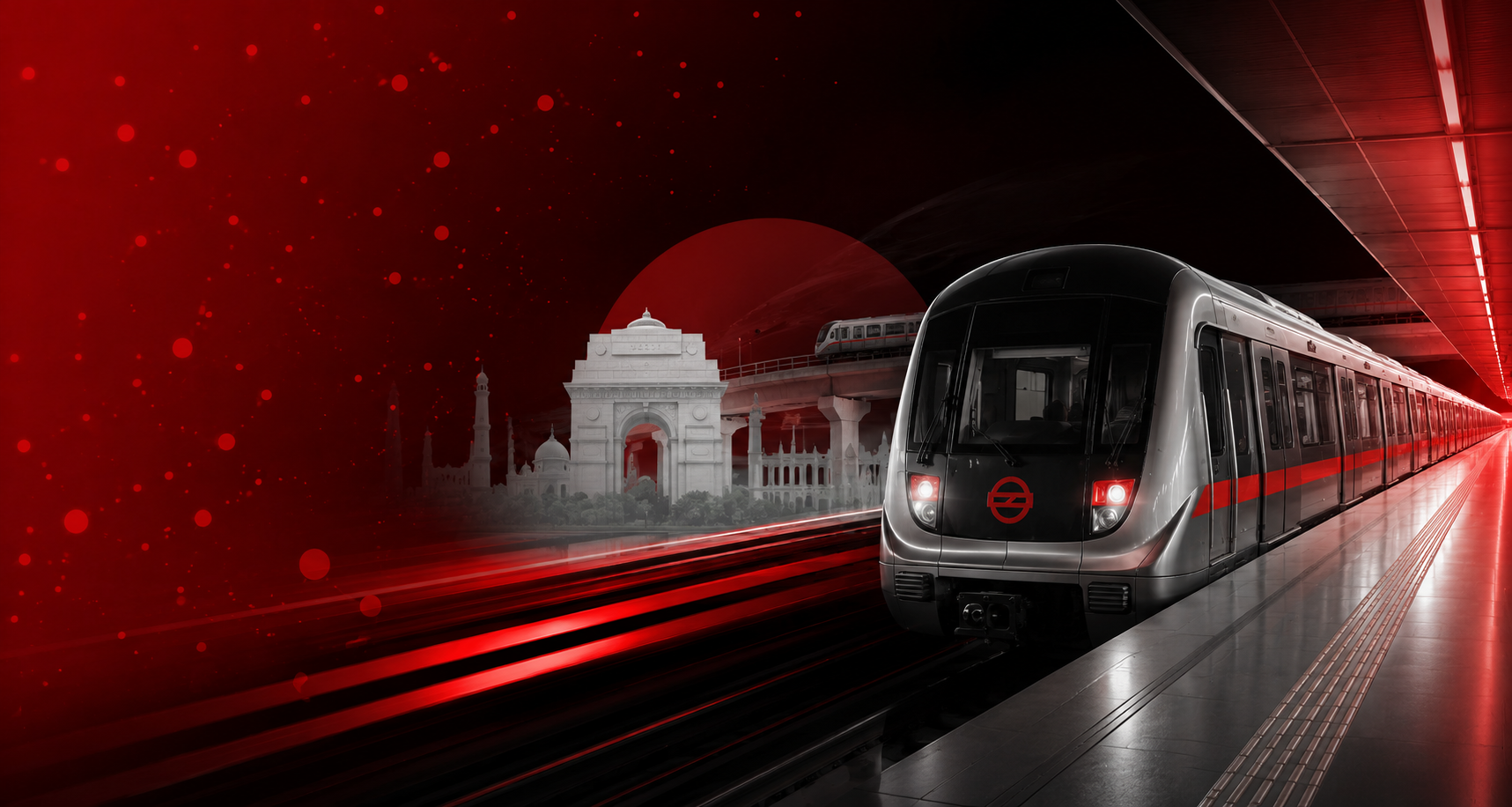
Metro advertising has emerged as one of the most powerful, high-visibility transit media platforms in India. As modern metro rail networks rapidly expand across tier-1 and tier-2 cities, brands gain direct access to millions of active, daily commuters.
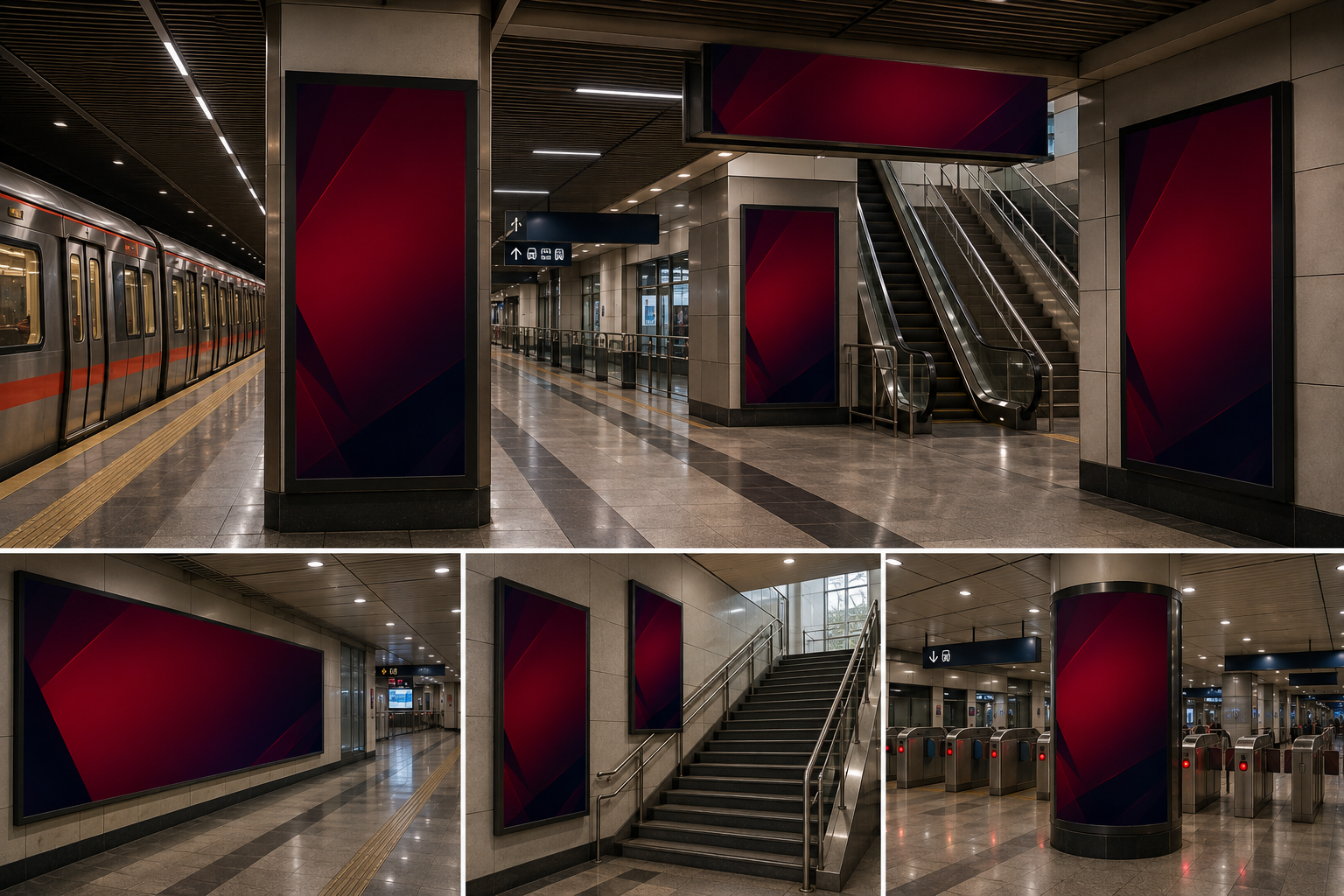
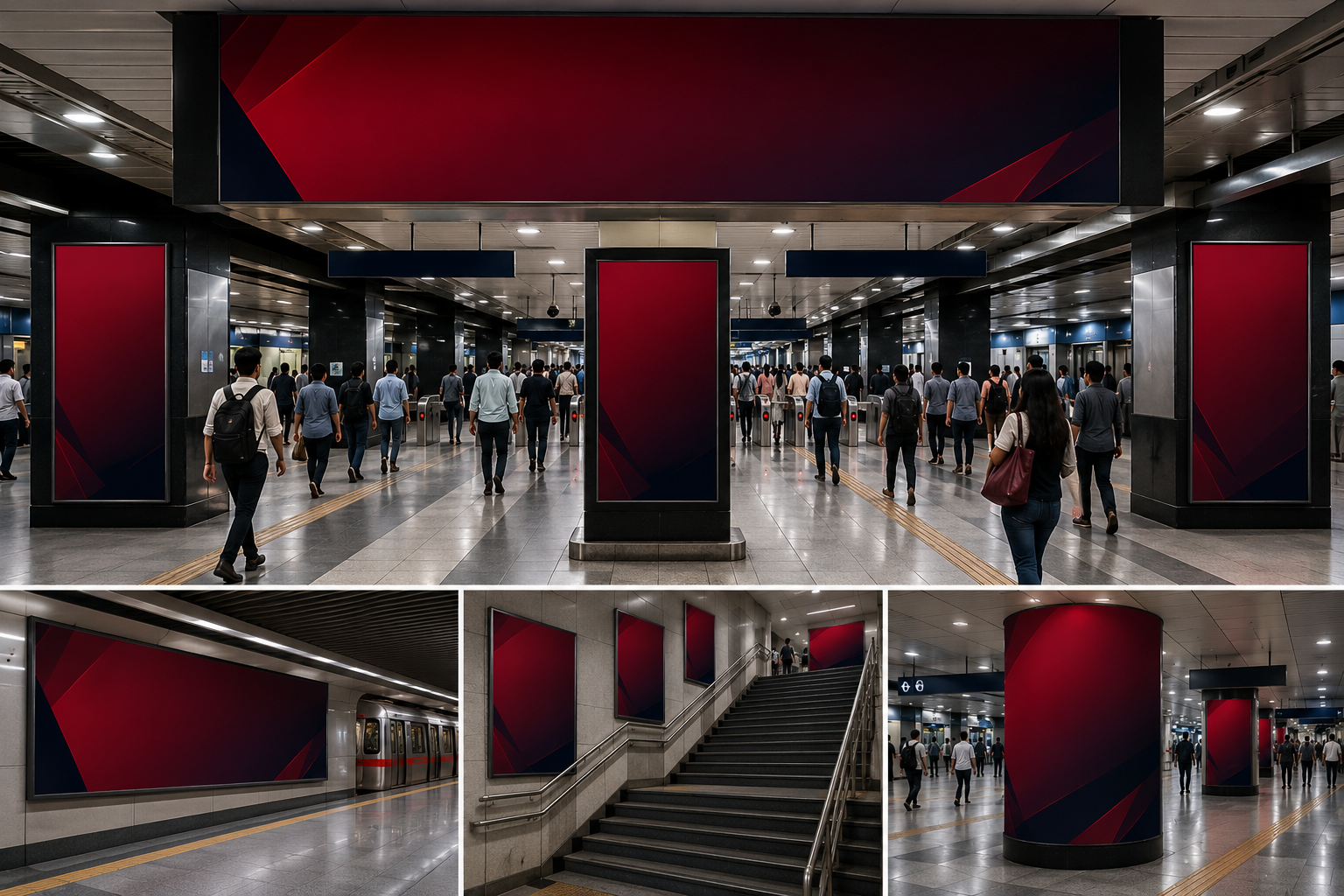
Metro advertising involves placing targeted promotional messages across a variety of high-traffic zones within the transit ecosystem. This includes full metro train wraps, internal coach panels, digital LED screens, station walls, entry/exit gates, escalators, and platform screen doors (PSDs).
By advertising in the metro environment, brands can engage a premium urban audience—including corporate professionals, college students, tourists, and daily shoppers—at a time when they are captive and highly receptive to visual cues.
At The Media Spaces, we operate as a specialized Metro Advertising Agency in India, helping brands strategize, launch, and manage high-impact outdoor media campaigns across all major metro networks. From identifying high-footfall transit hubs to securing the most competitive media rates, we ensure your brand gets maximum visibility and strong recall.
Why Metro Advertising is Effective for Brands
Unlike standard billboards, metro advertising places your message along the entire duration of a commuter's journey. With passengers regularly spending 15 to 45 minutes traveling or waiting on platforms, your brand benefits from prolonged exposure.
- Massive Daily Footfall: Tap into millions of daily passenger journeys across major economic hubs.
- Premium Urban Demographics: Reach affluent consumer segments with high purchasing power.
- Diverse Media Formats: Choose from dynamic digital loops, massive static wraps, or hyper-targeted ambient branding.
- Extended Dwell Time: Take advantage of the waiting periods on platforms and travel times inside train coaches.
- High Frequency & Recall: Daily commuters travel the exact same routes multiple times a week, building deep brand familiarity.
- Hyper-Local Targeting: Pick specific stations near tech parks, premium colleges, or retail zones to match your ideal customer profile.
Growth of Metro Rail Networks in India
Growth of Metro Rail Infrastructure in India
India's rapid urbanization has transformed metro rail systems into the backbone of public transit. With continuous state expansion and seamless integration with airports, major railway terminals, tech corridors, and shopping malls, metro environments have become premium commercial ecosystems. For modern brands, this massive, structured network offers an unrivalled out-of-home (OOH) marketing opportunity.
Metro Advertising Footfall Statistics (City-Wise)
The table below provides an estimated overview of daily ridership and operational scales across India's active metro networks.
|
Metro City |
Metro Network |
Estimated Daily Ridership |
Number of Stations |
Advertising Potential |
|
Delhi NCR |
Delhi Metro (DMRC) |
7,00,000+ |
280+ |
Very High |
|
Mumbai |
Mumbai Metro |
15,00,000+ |
60+ |
High |
|
Bengaluru |
Namma Metro |
9,50,000+ |
70+ |
High |
|
Hyderabad |
Hyderabad Metro |
7,50,000+ |
57+ |
High |
|
Kolkata |
Kolkata Metro |
7,00,000+ |
40+ |
High |
|
Chennai |
Chennai Metro |
6,00,000+ |
50+ |
Medium–High |
|
Kochi |
Kochi Metro |
3,90,000+ |
25+ |
Medium |
|
Ahmedabad |
Ahmedabad Metro |
1,70,000+ |
32+ |
Medium–High |
|
Noida |
Noida Metro (Aqua Line) |
1,70,000+ |
21+ |
Medium |
|
Lucknow |
Lucknow Metro |
1,50,000+ |
21+ |
Medium |
|
Jaipur |
Jaipur Metro |
1,50,000+ |
11+ |
Medium |
|
Kanpur |
Kanpur Metro |
1,40,000+ |
9+ |
Growing |
|
Pune |
Pune Metro |
1,00,000+ |
30+ |
Growing |
|
Nagpur |
Nagpur Metro |
60,000+ |
20+ |
Medium |
Peak Hours & High-Visibility Locations
Passenger traffic peaks significantly during specific windows, offering prime exposure for real-time digital campaigns and time-sensitive product launches:
- Morning Peak Hours: 8:00 AM – 11:00 AM (Primary office and college rush)
- Evening Peak Hours: 5:00 PM – 9:00 PM (Return transit and leisure commuters)
Top High-Footfall Transit Hubs for Station Domination
Certain interchange stations act as massive traffic funnels. Brands frequently pick these specific locations for Station Domination (buying out all available media space within a single station) to block out competitors completely:
- Delhi NCR: Rajiv Chowk, Kashmere Gate, Central Secretariat, Hauz Khas, Botanical Garden
- Mumbai: Andheri, Ghatkopar, Western Express Highway (WEH)
- Bengaluru: Majestic (Nadaprabhu Kempegowda), MG Road, Indiranagar
- Hyderabad: Ameerpet, Raidurg, Secunderabad East
- Kolkata: Esplanade, Dum Dum, Howrah
Metro Advertising Audience Profile
Metro Advertising Audience Profile
Understanding the demographic layout of public transit systems is essential for maximizing the return on investment of any out-of-home media campaign. Metro passengers in India typically belong to progressive, tech-savvy, and affluent urban consumer segments. Unlike traditional mass media channels that reach broad, unsegmented populations, the metro rail ecosystem acts as a natural filter, capturing a highly active workforce and upwardly mobile demographics with substantial purchasing power.
Because commuters enter this environment with specific intent—traveling to workplaces, corporate parks, premium educational institutions, or retail hubs—they are alert, highly observant, and in an active purchasing mindset. This distinct consumer environment allows brands to run targeted campaigns that match the lifestyle, daily routines, and spending habits of modern urban consumers.
Key Commuter Demographics & Audience Segments
The daily passenger mix inside modern metro networks is highly diverse but skews heavily toward young, educated, and financially independent individuals.
- Corporate Executives & Office Professionals: High-earning white-collar professionals commuting daily to major commercial business districts and IT parks.
- College and University Students: Tech-savvy young adults and trend-setters traveling to major educational hubs, making them ideal targets for lifestyle and digital-first brands.
- Affluent Urban Families: Shoppers and weekend commuters traveling to tier-1 retail malls, entertainment zones, and fine-dining districts.
- Tourists and Business Travelers: Inter-city travelers utilizing airport-express links and major railway interchange lines, carrying a high intent to spend on hospitality and premium services.
Core Industries Capitalizing on Metro Media
Due to this premium audience profile, metro advertising serves as a primary marketing channel for sectors aiming to drive high-value acquisitions, retail sales, or digital conversions.
- Real Estate & Premium Housing: Developers utilize large-format station panels to showcase luxury residential projects located along specific transit corridors.
- Technology & App-Based Services: FinTech platforms, e-commerce applications, and software-as-a-service (SaaS) brands use high-frequency coach interior panels to drive immediate mobile app downloads.
- Education & Career Development: Universities, coaching institutes, and global ed-tech platforms target the high concentration of student commuters during peak hours.
- Banking, Financial Services & Insurance (BFSI): Premium credit cards, investment funds, and insurance providers leverage the long dwell times on platforms to present sophisticated financial products.
- Consumer Electronics & Retail Brands: Smartphone manufacturers and fashion labels use high-definition digital screen networks to launch new products and drive immediate footfall to nearby retail outlets..
Major Metro Rail Networks in India
India's urban transit landscape has undergone a monumental transformation with the rapid deployment of modern high-speed rail networks. Today, major metro networks serve as the transport lifelines of the country's most densely populated tier-1 and tier-2 business capitals, collectively carrying millions of active corporate and retail passengers on a daily basis. From the pioneering, massive engineering marvel of the National Capital Region to the newly launched high-growth networks of tier-2 manufacturing hubs, these structured transit corridors provide brands with an unmatched geographic reach.
Among the frontrunners, networks like the Delhi Metro Rail Corporation (DMRC), Mumbai Metro, and Bengaluru's Namma Metro have set global benchmarks for mass transit volume and operational efficiency. Similarly, hyper-efficient systems operating across Hyderabad Metro Rail, Chennai Metro Rail, and the historic Kolkata Metro capture an elite mix of high-earning white-collar professionals and tech-savvy urban youth. As expanding routes continuously map into emerging commercial zones, suburban technology parks, and airport links, advertising across these major networks allows modern enterprises to implement high-frequency, impactful out-of-home marketing campaigns at scale.
Complete List of Active Metro Cities in India
The table below provides a structured overview of the major operational metro rail networks across India, showcasing the scale of lines currently moving traffic through each rapid transit system.
|
City / Region |
Metro Network Name |
Number of Operational Lines |
Strategic Advertising Value |
|
Delhi NCR |
Delhi Metro (DMRC) |
10+ Lines |
Maximum national reach, absolute market dominance. |
|
Mumbai |
Mumbai Metro |
5+ Lines |
High-yield corporate audience, intense financial hub exposure. |
|
Bengaluru |
Namma Metro |
3 Lines |
Exceptional penetration across tech corridors and IT parks. |
|
Hyderabad |
Hyderabad Metro |
3 Lines |
Deep reach across premium commercial and residential sectors. |
|
Kolkata |
Kolkata Metro |
5 Lines |
Access to India's oldest transit market with massive daily footfall. |
|
Chennai |
Chennai Metro |
2 Lines |
High visibility across key automotive and industrial zones. |
|
Kochi |
Kochi Metro |
1 Line |
Strong target market for premium retail and tourism campaigns. |
|
Ahmedabad |
Ahmedabad Metro |
2 Lines |
High exposure across rapidly expanding manufacturing and business belts. |
|
Pune |
Pune Metro |
2 Lines |
Elite demographic mix of tech professionals and student crowds. |
|
Nagpur |
Nagpur Metro |
2 Lines |
Broad local household penetration across clean transit loops. |
|
Noida |
Noida Metro (Aqua Line) |
1 Line |
Direct access to upscale suburban residential and institutional sectors. |
|
Lucknow |
Lucknow Metro |
1 Line |
High brand retention in the heart of Uttar Pradesh's capital. |
|
Jaipur |
Jaipur Metro |
1 Line |
High-impact visibility covering premium tourist and commercial avenues. |
|
Kanpur |
Kanpur Metro |
1 Line |
Emerging industrial population with strong growth in market consumption. |
|
Agra |
Agra Metro |
1 Line |
Perfect platform for lifestyle, heritage, and international tourism outreach. |
Strategic Value of Multi-City Metro Campaigns
For national brands aiming to establish deep consumer trust and undeniable visual dominance, coordinating localized multi-city activations provides a highly effective strategy. Instead of dealing with separate, fragmented transit corporations in every territory, partnering with a centralized media buying house optimizes your overall resource distribution.
By analyzing the specific operational lines and traffic intersections across these diverse city systems, marketing teams can customize their creative content to match regional consumer choices perfectly. Whether you deploy full external train wraps across the high-traffic lines of Delhi and Mumbai or choose targeted internal coach posters within southern tech capitals, using this structured transit grid allows your business to maintain constant, impactful exposure throughout the consumer's daily commute.
Metro Advertising Options in India
Depending on your marketing budget and campaign scale, you can choose from a broad palette of traditional and digital media formats:
- Metro Train Wraps: Full exterior vinyl branding of the entire train body. It acts as a massive moving billboard across the city.
- Coach Interior Panels: Static posters positioned directly above passenger seats or beside doors for maximum eye-level dwell time.
- Grab Handle Ads & Seat Branding: Highly localized, high-frequency touchpoints that passengers physically interact with throughout their ride.
- Digital LED & LCD Screens: High-definition video networks placed across ticket concourses and platforms, ideal for dynamic creatives.
- Escalator & Staircase Branding: Long, sequential side panels that capture commuters' undivided attention as they move between levels.
- Platform Screen Doors (PSDs): High-impact graphics placed right where passengers line up to board the trains.
Metro Advertising Cost in India
The cost of a metro advertising campaign is never fixed; it operates on a dynamic pricing model shaped by several operational and geographic variables. For brands looking to optimize their out-of-home (OOH) media spend, understanding these cost drivers is essential to building a high-ROI campaign that maximizes brand recall without overextending budgets.
The overall investment required for metro media is determined by five primary pillars:
- The Tier and City of the Metro Network: Premium, high-ridership transit systems like the Delhi Metro (DMRC) or Mumbai Metro command a pricing premium compared to developing transit lines in tier-2 cities like Jaipur or Kanpur.
- Station Categorization & Location: Stations are strictly categorized into tiers (such as Category A++, A, B, and C) based on their location and commercial value. Premium stations situated directly within central business districts, tech corridors, or major interchange hubs (like Rajiv Chowk in Delhi, Andheri in Mumbai, or Majestic in Bengaluru) have significantly higher advertising rates due to the sheer volume of high-income corporate professionals passing through daily.
- Selected Advertising Format: The structural medium you select dictates the core material and rental costs. Large-format, high-impact assets like full exterior train wraps require substantial investment for premium vinyl printing, nocturnal mounting, and media space leasing. Conversely, hyper-localized formats like coach interior panels, platform screen doors (PSDs), or station pillar posters offer highly cost-effective entry points for growing businesses.
- Campaign Duration and Scaling: Longer campaign commitments usually unlock substantial volume discounts. While digital screen loops can be booked for shorter, time-sensitive product launches, static displays typically require a minimum booking of one month to offset the initial structural production and alignment costs.
- Passenger Footfall and Dwell Time: Media assets placed in high-dwell zones—such as security lines, ticket concourses, and platform screen doors where passengers wait between three to eight minutes for the next train—command higher rates because they guarantee prolonged visual engagement.
Estimated Cost Breakdown by Media Format
To help plan your marketing allocation, the table below provides a market-wide estimation of monthly media card rates across different asset classes in India's top-tier metro networks.
|
Advertising Format |
Target Audience Focus |
Estimated Monthly Rental Range (Per Unit/Slot) |
Minimum Commitment |
|
Full Exterior Train Wrap |
Mass City Visibility & High Impact |
₹8,00,000 – ₹30,00,000 |
1 Month |
|
Coach Interior Panels |
Captive Commuters (15–45 min journey) |
₹5,00,000 – ₹2,50,000 (Per Train) |
1 Month |
|
Platform Screen Doors (PSDs) |
Waiting Passengers (Eye-level visibility) |
₹40,000 – ₹1,50,000 |
1 Month |
|
Station Domination |
Total Competitor Blockout (Selected Hub) |
₹5,00,000 – ₹25,00,000 |
1 Month |
|
Digital LED/LCD Screens |
Dynamic Video Loops (10-Second Slots) |
₹50,000 – ₹2,00,000 |
15–30 Days |
|
Station Pillars & Concourse Panels |
Localized Retail & Footfall Navigation |
₹15,000 – ₹1,50,000 |
1 Month |
Complete Metro Advertising Rate Card in India
Calculating the exact investment for a transit media campaign involves analyzing specific asset placements, geographic reaches, and network tiers. To maintain absolute budgeting transparency, The Media Spaces has compiled an exhaustive breakdown of Metro Train Advertising Costs and Metro Station Advertising Costs across India's key metropolitan regions.
These indicative rates reflect the baseline market valuations. Final campaign costs will adapt dynamically based on your precise station choices, total inventory volume, and the overall duration of your contract.
1. Metro Train Wrap Advertising Cost (City-Wise)
Exterior train wraps transform an entire transit vehicle into a massive, moving billboard that traverses the city's primary economic zones daily. Because this format delivers unmatched brand dominance and cannot be ignored, it is billed as a premium, high-impact asset. This format is highly recommended for national product launches, major corporate rebrands, and festive seasonal drives looking for maximum citywide reach.
The table below outlines the estimated monthly cost ranges for executing a full exterior metro train wrap campaign across India's active rapid transit networks:
|
Metro City / Region |
Media Option |
Estimated Monthly Cost Range (Per Train) |
Primary Operational Value |
|
Delhi NCR |
Full External Train Wrap |
₹20,00,000 – ₹45,00,000 |
Reaches millions across massive cross-state lines daily. |
|
Mumbai |
Full External Train Wrap |
₹18,00,000 – ₹30,00,000 |
Massive exposure to high-income corporate commuter lines. |
|
Bengaluru |
Full External Train Wrap |
₹15,00,000 – ₹25,00,000 |
Filters directly into premium IT parks and tech corridors. |
|
Hyderabad |
Full External Train Wrap |
₹12,00,000 – ₹22,00,000 |
Strong visibility across the core retail and software belts. |
|
Chennai |
Full External Train Wrap |
₹12,00,000 – ₹20,00,000 |
Continuous exposure throughout major industrial corridors. |
|
Kolkata |
Full External Train Wrap |
₹10,00,000 – ₹18,00,000 |
Unrivaled passenger density across traditional markets. |
|
Kochi |
Full External Train Wrap |
₹6,00,000 – ₹12,00,000 |
Highly effective targeting for retail and tourism drives. |
|
Jaipur |
Full External Train Wrap |
₹5,00,000 – ₹10,00,000 |
Premium brand positioning across tourist-heavy routes. |
|
Lucknow |
Full External Train Wrap |
₹5,00,000 – ₹10,00,000 |
High-frequency local recall in a fast-growing tier-2 hub. |
2. General Metro Station Advertising Cost
For brands pursuing a hyper-local marketing strategy, indoor and ambient station media formats offer exceptional precision. Instead of branding a moving train, station media allows you to capture consumers at specific touchpoints along their daily foot journey—from the moment they clear security to the minutes spent waiting on the platform.
The table below details the baseline monthly rental expectations for standard, non-premium station formats across major Indian networks:
|
Advertising Format |
Primary Commuter Touchpoint |
Estimated Monthly Cost Range |
Strategic Advantage |
|
Station Panel |
Ticket Concourses & Walkways |
₹50,000 – ₹2,50,000 |
Targets slow-moving foot traffic during entries and exits. |
|
Digital Screen Ads |
Security Queues & Platforms |
₹80,000 – ₹2,00,000 |
Dynamic video loops that capture high-frequency visual attention. |
|
Escalator Branding |
Vertical Transit Side Panels |
₹1,00,000 – ₹3,00,000 |
Delivers extended, unskippable dwell time between levels. |
|
Pillar Branding |
Structural Support Columns |
₹75,000 – ₹1,50,000 |
Creates a sequential, repetitive viewing loop down the concourse. |
|
Platform Panels |
Direct Eye-Level Waiting Zones |
₹50,000 – ₹2,50,000 |
Captures captive audiences waiting 3 to 8 minutes for trains. |
3. Premium Rate Card for High-Footfall Transit Hubs
Not all stations are created equal. Stations situated directly within central business districts, elite financial zones, or major multi-line interchange hubs command higher rates because they experience massive commuter traffic. These premium locations offer brands a concentrated pool of high-income corporate executives, tech professionals, and affluent shoppers, making them the ultimate choices for high-conversion Station Domination campaigns.
Below is an indicative metro advertising rate card for elite, high-visibility station formats across India’s primary economic hubs:
|
Metro City |
Station Classification / Hub Type |
Media Format Selected |
Monthly Cost Range |
|
Delhi |
Major Multi-Line Interchange Station |
High-Impact Station Panels |
₹1,50,000 – ₹3,00,000 |
|
Delhi |
Premium Corporate/Commercial Station |
Dynamic Digital Screens |
₹2,00,000 – ₹5,00,000 |
|
Delhi |
Core Business District Hub |
Escalator Side Branding |
₹3,00,000 – ₹6,00,000 |
|
Mumbai |
Elite Corporate High-Street Station |
Large-Format Station Panels |
₹1,20,000 – ₹2,80,000 |
|
Mumbai |
Premium Suburban Interchange Station |
High-Definition Digital Screens |
₹2,00,000 – ₹4,50,000 |
|
Bengaluru |
Major Tech Corridor Station |
Eye-Level Platform Panels |
₹1,00,000 – ₹2,50,000 |
|
Bengaluru |
Central Multi-Route Transit Hub |
High-Definition Digital Screens |
₹1,80,000 – ₹3,80,000 |
|
Hyderabad |
Primary Central Interchange Hub |
High-Visibility Platform Panels |
₹80,000 – ₹2,00,000 |
|
Hyderabad |
Major Commercial/IT Sector Station |
Dynamic Digital Screens |
₹1,50,000 – ₹3,00,000 |
|
Chennai |
Central Commercial Terminal Station |
High-Contrast Station Panels |
₹80,000 – ₹2,20,000 |
|
Chennai |
Premium Airport Link Station |
Premium Digital Screens |
₹1,50,000 – ₹3,20,000 |
|
Kolkata |
Major High-Footfall Junction Station |
Eye-Level Platform Panels |
₹70,000 – ₹1,80,000 |
|
Kochi |
Premium Retail & Tourism Station |
Central Station Panels |
₹50,000 – ₹1,20,000 |
|
Lucknow |
Capital Commercial Center Station |
Eye-Level Platform Panels |
₹40,000 – ₹1,00,000 |
|
Jaipur |
Major Heritage Commercial Station |
Central Station Panels |
₹35,000 – ₹90,000 |
When budgeting for a transit media drive, looking purely at the lowest rate card can be counterproductive. A smart media planning strategy focuses heavily on audience mapping and geographic alignment. For instance, a localized retail brand or educational institute gains far better conversion rates by dominating 2 or 3 hyper-targeted stations directly within their immediate catchment zone rather than spreading a thin budget across random interior coach panels citywide.
Partnering with an expert agency like The Media Spaces enables your business to bypass standardized premium card rates, leveraging our network volume to secure customized packages, seasonal bundle discounts, and optimized media combinations tailored precisely to your overall target budget.
How to Calculate Metro Advertising Cost
Standard Media Cost Calculation Formula
To map out your out-of-home ad spend roughly, use the standard baseline formula:

Note: Production, mounting, printing, and local municipal taxes are usually calculated as separate line items depending on layout volume.
Step-by-Step Process for Metro Advertising
A Strategic Approach: Step-by-Step Campaign Execution
1.Define Objectives & Media Budgets:Phase 1.
Determine if your goal is broad citywide brand awareness or local retail store footfall. Aligning this targets your choice between massive train wraps or select station panels.
2.Geographic & Station Mapping:Phase 2.
We filter stations based on proximity to your target audience—such as picking IT-heavy routes for B2B/Tech brands or stations near universities for lifestyle brands.
3.Inventory Allocation & Rate Negotiation:Phase 3.
As your agency partner, The Media Spaces checks real-time inventory availability across DMRC, Mumbai Metro, or Namma Metro, securing optimal ad slots at competitive prices.
4.Creative Design & Technical Verification:Phase 4.
Creatives are formatted precisely to the technical specifications of the metro authorities. We ensure bold typography and high-contrast visuals that read clearly from a distance.
5.Conforming to Approvals & Mounting:Phase 5.
We handle all content approvals from local transit authorities, manage high-grade vinyl printing, and supervise nocturnal mounting sessions to prevent commuter disruption.
6.Monitoring & Campaign Reporting:Phase 6.
Receive a comprehensive campaign delivery report including geo-tagged, timestamped site installation photographs and maintenance logs.
Why Partner with The Media Spaces? The Metro Advertising Agency
Navigating the intricacies of transit concessions, licensing policies, and multi-city transit networks across India can be incredibly complex for modern brands. As a premier, specialized Metro Advertising Agency, The Media Spaces streamlines this entire process, acting as your dedicated, end-to-end media planning and execution partner. We understand that effective transit marketing requires more than just booking random ad space; it demands a data-driven strategy that matches your brand message with the exact daily routines, transit lines, and footfall behaviors of your target audience. By taking a holistic approach to out-of-home (OOH) media, we ensure that your business achieves undeniable urban authority, massive visual recall, and a highly optimized return on your marketing investment.
- Integrated Inventory Access: Run unified campaigns spanning multiple metro corporations across India without dealing with fragmented regional vendors.
- Optimized Rate Structuring: Our deep industry connections and bulk inventory buying allow us to transfer substantial cost savings directly to your brand.
- Turnkey Campaign Execution: We take complete responsibility for creative print proofs, administrative approvals, overnight mounting, and continuous media upkeep.
Email Us Today: enquiry@themediaspaces.com
Frequently Asked Questions
Q1. What is metro advertising?
Metro advertising refers to advertisements placed inside metro stations, trains, and metro premises.
Q2. How much does metro advertising cost in India?
Metro advertising costs typically range from ₹50,000 to ₹40,00,000 per month depending on the format and location.
Q3. What are the types of metro advertising formats?
Train wraps, station panels, digital screens, escalator branding, and pillar branding.
Q4. Which cities have metro advertising opportunities?
Major metro cities include Delhi, Mumbai, Bengaluru, Hyderabad, Chennai, and Kolkata.
Q5. Is metro advertising effective?
Yes, metro advertising provides high visibility among daily commuters.
Q6. What is a metro train wrap?
A metro train wrap is a full exterior branding of a metro train.
Q7. Can brands advertise in specific metro stations?
Yes, advertisers can select individual stations based on footfall.
Q8. What is station domination advertising?
Station domination involves branding multiple advertising spaces within a metro station.
Q9. How long do metro advertising campaigns run?
Campaigns typically run from 1 month to 6 months.
Q10. Why work with a metro advertising agency?
Agencies help manage approvals, negotiate rates, and execute campaigns efficiently.