
Railway Station
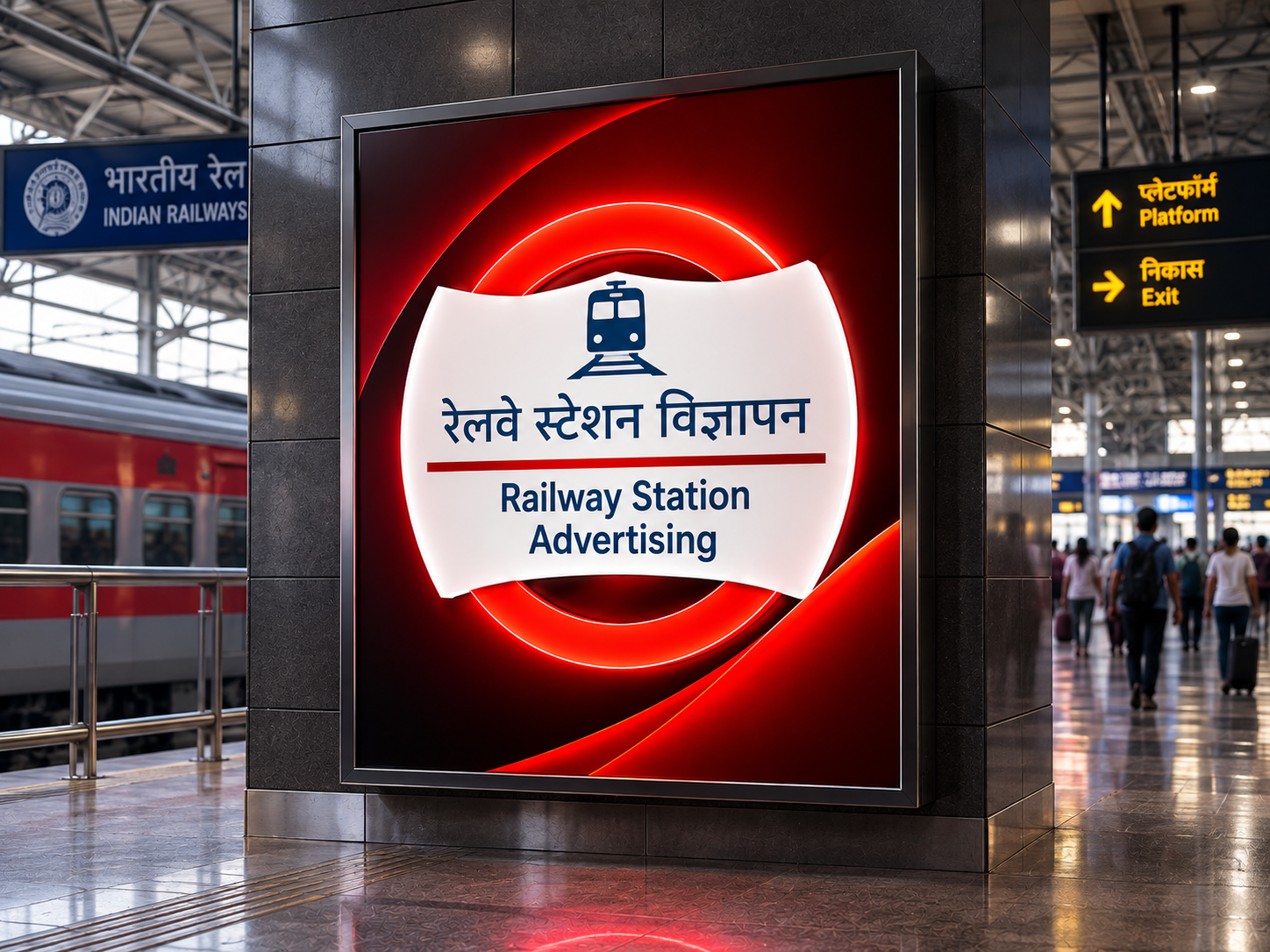
Railway Station Advertising in India helps brands reach high-footfall passenger audiences through Static Displays, Digital Screens, Platform Advertising, Entry & Exit Branding, Kiosks, Activations, and Station Branding. Plan single-station, city-wise, regional, or multi-city railway advertising campaigns with competitive rates and strategic media planning.
Key Insights
Railway Station Advertising
Railway Station Advertising enables brands to reach millions of passengers across one of India’s most extensive and high-footfall transit environments. With railway stations serving daily commuters, interstate passengers, business travellers, tourists, students, families, and regional audiences, advertising at railway stations provides brands with continuous visibility across metropolitan cities, Tier-1, Tier-2, and emerging markets.
Brands can use Railway Station Advertising in India to execute campaigns at an individual station, city, regional, or multi-city level. Advertising inventory can be strategically selected across high-visibility passenger touchpoints such as platforms, entry and exit areas, concourses, waiting areas, ticketing zones, foot over bridges, and other prominent locations within railway stations. This flexibility enables advertisers to target specific geographic markets while maintaining strong campaign frequency and visibility.
Unlike advertising formats where audiences may have limited exposure to a message, railway stations provide multiple opportunities for brand interaction throughout the passenger journey. Commuters spend time entering the station, waiting for trains, moving between platforms, and exiting the premises, creating repeated opportunities for brands to communicate through Static Displays, Digital Screens, Platform Advertising, Entry & Exit Branding, Kiosks, Promotional Activations, and Station Branding.
Railway advertising can support a wide range of marketing objectives, including brand awareness, product launches, retail promotions, regional campaigns, new market expansion, event promotions, public awareness campaigns, and nationwide brand communication. Advertisers can select stations and media formats according to their target audience, geographic priorities, campaign duration, and advertising budget.
As a Railway Station Advertising Agency in India, The Media Spaces provides end-to-end campaign planning, station selection, media planning, media buying, advertising rate negotiation, creative coordination, campaign execution, and monitoring. Whether you are looking to advertise at a single railway station, target multiple stations within a city, or execute a multi-city Railway Advertising campaign in India, our team helps brands identify suitable stations, locations, and advertising formats based on their campaign objectives and budget.
About Railway Station Advertising
Railway Station Advertising is a high-visibility transit advertising medium that allows brands to communicate with passengers across multiple touchpoints within railway stations. With passengers moving through entrances, ticketing areas, concourses, waiting areas, foot over bridges, platforms, and exits, railway stations provide repeated opportunities for brand exposure throughout the passenger journey.
One of the major strengths of Railway Advertising in India is its ability to reach a broad and diverse audience. Railway stations are used by daily commuters, office professionals, business travellers, tourists, students, families, interstate passengers, residents, and regional audiences, enabling brands to communicate with different consumer segments within the same transit environment.
Advertising campaigns can be planned at an individual station, city, regional, or multi-city level depending on the advertiser's target market and campaign objectives. Brands can select premium high-footfall railway stations for large-scale visibility or choose specific regional stations for geographically targeted campaigns.
Railway stations also offer multiple advertising formats, including Static Displays, Digital Screens, Platform Advertising, Entry & Exit Advertising, Concourse Branding, Foot Over Bridge Advertising, Waiting Area Advertising, Promotional Kiosks, Experiential Activations, and Station Branding. The availability of formats may vary depending on the railway station, location, and approved advertising inventory.
For advertisers, this combination of high passenger movement, repeated exposure, geographic targeting, multiple advertising formats, and flexible campaign coverage makes Railway Station Advertising suitable for both local businesses and large brands seeking visibility across important markets in India.
Railway Station Advertising – Key Highlights
Railway Station Advertising provides brands with extensive geographic coverage, diverse passenger audiences, and multiple high-visibility advertising touchpoints. Campaigns can be planned for individual stations, selected cities, regional markets, or multiple cities depending on the advertiser’s target audience and campaign objectives.
The following highlights provide a quick overview of Railway Station Advertising in India:
|
Category |
Details |
|
Advertising Medium |
Railway Station Advertising |
|
Geographic Coverage |
Metro Cities, Tier-1, Tier-2 & Regional Markets Across India |
|
Campaign Coverage |
Single Station, City, Regional & Multi-City Campaigns |
|
Audience |
Daily Commuters, Business Travellers, Office Professionals, Tourists, Students, Families & Interstate Passengers |
|
Advertising Options |
Static Displays, Digital Screens, Platform Advertising, Entry & Exit Advertising, Concourse Branding, Kiosks, Activations & Station Branding |
|
High-Visibility Locations |
Platforms, Entry & Exit Areas, Concourses, Waiting Areas, Ticketing Zones & Foot Over Bridges |
|
Campaign Duration |
Short-Term, Monthly & Long-Term Campaigns |
|
Targeting Options |
Station-Wise, City-Wise, Regional & Multi-City |
|
Ideal For |
Brand Awareness, Product Launches, Retail Promotions, Regional Campaigns, Events & Public Awareness |
|
Key Industries |
FMCG, BFSI, Real Estate, Education, Automobile, Telecom, Retail, E-commerce, Travel & Entertainment |
With multiple advertising formats and flexible geographic targeting, Railway Advertising in India enables brands to build visibility across important passenger touchpoints while selecting stations and markets according to their campaign requirements and advertising budget.
Railway Station Advertising Across India
Railway Station Advertising in India enables brands to build visibility across major metropolitan cities, Tier-1 destinations, Tier-2 cities, and important regional markets. The extensive geographic spread of railway travel allows advertisers to plan campaigns according to specific markets, passenger profiles, business locations, and regional marketing objectives.
Brands can plan Railway Advertising campaigns across major markets such as Delhi NCR, Mumbai, Kolkata, Chennai, Bengaluru, Hyderabad, Ahmedabad, Pune, Jaipur, Lucknow, Chandigarh, Patna, Bhopal, Indore, Nagpur, Kochi, Bhubaneswar, Guwahati, Ranchi, Varanasi, Kanpur, Surat, and other important railway destinations across India.
In major metropolitan markets, advertisers can target high-footfall stations such as New Delhi Railway Station, Hazrat Nizamuddin Railway Station, Anand Vihar Terminal, Chhatrapati Shivaji Maharaj Terminus, Mumbai Central, Howrah Junction, Sealdah Railway Station, Chennai Central, KSR Bengaluru City Railway Station, and Secunderabad Junction. These stations serve large and diverse passenger audiences and provide multiple opportunities for high-visibility brand communication.
Regional and Tier-2 railway stations can also be valuable for brands seeking deeper geographic penetration. Businesses can select stations based on their distribution network, retail presence, target states, product availability, language markets, and campaign objectives, making railway station media suitable for both national and regional advertisers.
Campaign coverage can be customised at different levels:
· Single-Station Campaigns: Target one strategically important railway station.
· City-Wide Campaigns: Select multiple railway stations within a particular city or market.
· Regional Campaigns: Build visibility across stations within selected states or geographic regions.
· Multi-City Campaigns: Advertise across important railway stations in multiple cities for broader market coverage.
· Pan-India Campaigns: Develop large-scale railway advertising plans covering strategically selected stations across India.
This geographic flexibility allows advertisers to use Railway Station Advertising for local promotions, regional expansion, product launches, retail campaigns, and large multi-market brand initiatives while selecting locations according to audience relevance and campaign budget.
Railway Station Advertising Audience Profile
One of the key strengths of Railway Station Advertising is its ability to reach a large and diverse passenger audience within a high-movement transit environment. Railway stations attract people across different age groups, income levels, professions, travel purposes, and geographic regions, making them suitable for both mass-market and targeted advertising campaigns.
The audience at railway stations includes daily commuters, office professionals, business travellers, tourists, students, families, interstate passengers, residents, and regional travellers. Major railway stations in metropolitan cities also attract corporate executives, entrepreneurs, government employees, and frequent travellers, while regional stations provide brands with access to consumers across Tier-2, Tier-3, and emerging markets.
Passengers interact with different areas of a railway station throughout their journey, including entry points, ticketing areas, concourses, waiting areas, foot over bridges, platforms, and exit zones. This movement creates multiple opportunities for brands to achieve repeated exposure through strategically positioned advertising media.
Key Audience Segments
|
Audience Segment |
Advertising Opportunity |
|
Daily Commuters |
High-frequency exposure and repeated brand visibility |
|
Office Professionals |
Banking, Fintech, Telecom, Automobile, Real Estate & Consumer Services |
|
Business Travellers |
BFSI, Technology, Hospitality, Travel & Premium Services |
|
Families |
FMCG, Retail, Consumer Durables, Healthcare & Entertainment |
|
Students & Young Adults |
Education, EdTech, Smartphones, Fashion, Entertainment & Digital Services |
|
Tourists |
Hotels, Travel, Tourism, Food, Retail & Local Services |
|
Interstate Passengers |
FMCG, Telecom, Financial Services, E-commerce & Consumer Brands |
|
Regional Audiences |
Local Retail, Education, Real Estate, Healthcare & Regional Brands |
The diverse audience profile allows advertisers to select railway stations according to their target geography, consumer segment, product category, distribution network, and campaign objective. A brand can target premium metropolitan markets through major city stations or build deeper regional penetration through strategically selected stations across Tier-2 and emerging cities.
This combination of diverse audiences, repeated passenger movement, multiple advertising touchpoints, and broad geographic coverage makes Railway Station Advertising suitable for brands seeking both mass visibility and market-specific consumer reach.
Why Advertise at Railway Stations?
Railway Station Advertising gives brands access to a high-footfall transit environment where passengers spend time waiting, walking between platforms, entering and exiting stations, and using station facilities. This creates multiple opportunities for advertising exposure during a single passenger journey and makes railway stations suitable for both large-scale brand campaigns and geographically targeted promotions.
High Passenger Visibility: Railway stations serve a continuous flow of passengers throughout the day. Advertising placed at prominent locations such as platforms, concourses, entry and exit points, waiting areas, ticketing zones, and foot over bridges can generate strong visibility among passengers moving through the station.
Multiple Advertising Touchpoints: Unlike advertising environments with a single point of exposure, railway stations allow brands to communicate with passengers at different stages of their journey. Static Displays, Digital Screens, Platform Advertising, Kiosks, and Station Branding can be combined to create repeated brand exposure across the station.
Longer Dwell Time: Passengers often spend time waiting for train arrivals, departures, connections, or boarding. This dwell time provides advertisers with an opportunity to deliver messages in an environment where audiences may have more time to notice and absorb advertising communication.
Metro, Regional and Multi-City Reach: Brands can use Railway Advertising in India to target major metropolitan markets as well as Tier-2 and regional cities. Campaigns can be planned at a single-station, city, regional, or multi-city level, providing flexibility for both local businesses and national advertisers.
Diverse Consumer Audience: Railway stations attract daily commuters, office professionals, business travellers, students, tourists, families, interstate passengers, and regional consumers. This broad audience makes railway advertising relevant to categories ranging from FMCG and retail to BFSI, education, telecom, real estate, travel, and entertainment.
High-Frequency Brand Exposure: Daily commuters using the same railway stations regularly can encounter advertising repeatedly over the campaign period. This repeated exposure can help reinforce brand awareness, campaign messaging, promotional offers, and brand recall.
Strategic Geographic Targeting: Advertisers can select stations according to their business presence, distribution network, retail footprint, target states, audience profile, and priority markets. This makes railway station media particularly useful for brands expanding into new cities or strengthening visibility in specific regions.
Flexible Advertising Formats: Railway stations offer multiple advertising options that can accommodate different campaign objectives and budgets. Brands can choose from static media, digital displays, platform advertising, entry and exit branding, kiosks, activations, and larger station branding opportunities, subject to inventory availability.
Suitable for Multiple Campaign Objectives: Railway Station Advertising can support brand awareness, product launches, festive promotions, retail campaigns, new store openings, regional expansion, event promotions, app campaigns, financial products, public awareness initiatives, and other consumer-focused communication.
By combining high passenger movement, dwell time, repeated visibility, diverse audiences, multiple advertising formats, and geographic flexibility, railway stations provide brands with a powerful transit advertising environment for building sustained visibility across India.
Railway Station Advertising Options
Railway Station Advertising offers multiple media formats that allow brands to engage passengers throughout their journey—from station entry and ticketing areas to concourses, waiting zones, platforms, foot over bridges, and exits. Advertisers can select individual formats or combine multiple media options to create an integrated railway station advertising campaign.
Static Display Advertising: Static advertising provides continuous brand visibility through strategically positioned display panels across railway stations. These displays can be placed at high-footfall passenger locations and are suitable for brand awareness, product launches, retail promotions, real estate campaigns, financial services, education, FMCG, and consumer brands.
Digital Screen Advertising: Digital Railway Station Advertising uses LED and digital screens to display dynamic advertisements at selected station locations. Digital media allows brands to use motion graphics, multiple creatives, promotional messages, and frequently updated communication, making it particularly suitable for DOOH campaigns, product launches, entertainment, retail offers, apps, and time-sensitive promotions.
Railway Platform Advertising: Railway Platform Advertising places brands directly within passenger waiting and boarding areas. Since passengers often spend considerable time on platforms before their trains arrive, platform media can provide prolonged visibility and repeated exposure throughout the campaign period.
Entry & Exit Advertising: Station entrances and exits are important advertising locations because a large proportion of passengers pass through these areas. Railway Station Entry and Exit Advertising enables brands to create visibility at key transition points and can be particularly effective for campaigns targeting both arriving and departing passengers.
Concourse Advertising: Railway station concourses connect important passenger movement areas such as entrances, platforms, ticketing facilities, waiting areas, and exits. Advertising within these high-movement zones can help brands achieve strong visibility among passengers travelling through different parts of the station.
Foot Over Bridge Advertising: Foot Over Bridge Advertising targets passengers moving between railway platforms. Depending on the station and available inventory, branding can be positioned along prominent passenger movement routes to create repeated visibility during platform transfers.
Waiting Area Advertising: Waiting halls and designated passenger waiting areas provide opportunities to reach audiences with relatively longer dwell times. Advertising in these locations can be effective for messages that require more time to communicate, including financial services, travel, education, healthcare, real estate, consumer electronics, and digital services.
Promotional Kiosks: Promotional Kiosks at railway stations enable brands to interact directly with passengers. Kiosks can be used for product demonstrations, lead generation, registrations, service enquiries, promotional offers, and other consumer engagement activities, subject to station permissions and inventory availability.
Experiential Activations: Brands can use selected railway station spaces for experiential marketing, product sampling, demonstrations, contests, interactive activities, and consumer engagement campaigns. Activations are particularly useful when the objective extends beyond visibility to direct passenger interaction.
Railway Station Branding: Railway Station Branding combines multiple available advertising touchpoints within a station to create high-impact brand visibility. Depending on the station and approved inventory, campaigns can integrate static displays, digital screens, platform media, entry and exit branding, and other prominent advertising locations.
By combining different formats, advertisers can create an integrated Railway Advertising campaign that engages passengers at multiple stages of their journey while selecting media according to the station, target audience, campaign objective, and advertising budget.
Railway Station Advertising Cost in India
The Railway Station Advertising Cost in India depends on the selected railway station, city, advertising format, media location, display size, passenger footfall, campaign duration, and inventory availability. Advertising at major high-footfall railway stations generally commands higher rates, while regional and smaller stations can provide more economical options for targeted campaigns.
Brands can choose from Static Displays, Digital Screens, Platform Advertising, Entry & Exit Advertising, Concourse Media, Promotional Kiosks, Activations, and Station Branding, with each format following a different pricing structure. Campaigns can also be planned for a single location within a station, multiple media units, an entire station, or several railway stations across different cities.
The following provides an indicative starting point for planning a railway station advertising campaign in India:
|
Railway Advertising Format |
Indicative Starting Cost |
|
Static Display Advertising |
₹10,000 onwards |
|
Digital Screen Advertising |
₹10,000 onwards |
|
Platform Advertising |
₹7,000 onwards |
|
Entry & Exit Advertising |
₹7,000 onwards |
|
Concourse Advertising |
₹10,000 onwards |
|
Foot Over Bridge Advertising |
₹10,000 onwards |
|
Waiting Area Advertising |
₹7,000 onwards |
|
Promotional Kiosk |
₹15,000 onwards |
|
Experiential Activation |
₹25,000 onwards |
|
Station Branding |
On Request |
Static Railway Station Advertising Cost: Static Railway Station Advertising starts from approximately ₹10,000, depending on the station, media location, display size, and campaign duration. Premium locations at high-footfall stations can command higher rates because of greater passenger visibility.
Digital Railway Station Advertising Cost: Digital Railway Station Advertising starts from approximately ₹10,000. Pricing depends on screen location, screen size, advertising duration, frequency of advertisement playback, station footfall, and the number of digital screens included in the campaign.
Platform Advertising Cost: Railway Platform Advertising starts from approximately ₹7,000 for selected inventory. Rates vary according to the railway station, platform location, media size, passenger movement, visibility, and campaign period.
Entry & Exit Advertising Cost: Advertising at railway station entry and exit locations can start from approximately ₹7,000. These areas can attract premium pricing at major stations because they capture substantial passenger movement during arrival and departure.
Premium and Integrated Campaigns: Larger formats, premium station locations, multiple advertising units, digital networks, activations, and complete Railway Station Branding are generally planned through customised commercial packages. Campaign costs can therefore vary substantially depending on the scale of the media plan.
The above Railway Station Advertising Rates are indicative starting prices and should not be treated as fixed rate cards. Final costs depend on the selected station, city, advertising format, media location, display specifications, campaign duration, seasonality, and inventory availability.
City-Wise Railway Station Advertising Rates
The cost of Railway Station Advertising varies across Indian cities based on passenger footfall, importance of the railway station, advertising demand, media location, format, campaign duration, and inventory availability. Metro cities and major railway hubs generally require higher campaign budgets, while Tier-2 and regional markets can offer comparatively economical advertising opportunities.
|
City |
Indicative Starting Campaign Cost |
|
Delhi NCR |
₹2,50,000 onwards |
|
Mumbai |
₹2,50,000 onwards |
|
Kolkata |
₹2,50,000 onwards |
|
Chennai |
₹2,25,000 onwards |
|
Bengaluru |
₹2,25,000 onwards |
|
Hyderabad |
₹2,25,000 onwards |
|
Pune |
₹2,00,000 onwards |
|
Ahmedabad |
₹1,75,000 onwards |
|
Jaipur |
₹1,50,000 onwards |
|
Lucknow |
₹1,50,000 onwards |
|
Chandigarh |
₹1,50,000 onwards |
|
Patna |
₹1,25,000 onwards |
|
Bhopal |
₹1,25,000 onwards |
|
Bhubaneswar |
₹1,25,000 onwards |
|
Kochi |
₹1,25,000 onwards |
The above figures represent indicative starting campaign budgets and not the price of an individual media unit. A campaign may include one or multiple advertising locations depending on the selected station, media format, availability, and campaign requirements.
Final Railway Station Advertising Cost may vary according to the railway station, passenger footfall, media size, placement, static or digital format, number of advertising units, campaign duration, seasonality, and available inventory. Multi-station and multi-city campaigns can be planned through customised media packages based on the advertiser's target markets and overall budget.
Major Railway Stations for Advertising in India
Railway Station Advertising in India can be planned across major metropolitan railway terminals, high-footfall junctions, and strategically important regional stations. Advertisers can select individual stations or build multi-station campaigns based on target cities, passenger profiles, distribution markets, and campaign objectives.
The following are some of the important railway stations that brands can consider for advertising campaigns across India:
|
City / Market |
Major Railway Stations |
|
Delhi NCR |
New Delhi Railway Station, Hazrat Nizamuddin Railway Station, Anand Vihar Terminal, Old Delhi Railway Station |
|
Mumbai |
Chhatrapati Shivaji Maharaj Terminus (CSMT), Mumbai Central, Dadar, Bandra Terminus, Lokmanya Tilak Terminus |
|
Kolkata |
Howrah Junction, Sealdah Railway Station, Kolkata Railway Station |
|
Chennai |
MGR Chennai Central, Chennai Egmore |
|
Bengaluru |
KSR Bengaluru City Junction, Yesvantpur Junction, SMVT Bengaluru |
|
Hyderabad |
Secunderabad Junction, Hyderabad Deccan (Nampally), Kacheguda |
|
Pune |
Pune Junction |
|
Ahmedabad |
Ahmedabad Junction |
|
Jaipur |
Jaipur Junction |
|
Lucknow |
Lucknow Charbagh |
|
Chandigarh |
Chandigarh Junction |
|
Patna |
Patna Junction |
|
Bhopal |
Bhopal Junction, Rani Kamalapati Railway Station |
|
Bhubaneswar |
Bhubaneswar Railway Station |
|
Kochi |
Ernakulam Junction, Ernakulam Town |
Selecting the Right Railway Station: The largest railway station is not necessarily the best advertising choice for every campaign. Station selection should depend on the brand's target geography, passenger profile, distribution presence, campaign objective, available media inventory, and advertising budget.
National brands can combine major railway hubs across multiple cities to achieve broader visibility, while regional businesses can concentrate their investment on selected stations within priority markets. Brands targeting Delhi NCR, for example, can select between New Delhi, Hazrat Nizamuddin, Anand Vihar Terminal, and Old Delhi depending on the audience and geographic areas they want to influence.
A well-planned Railway Station Advertising campaign should therefore prioritise audience relevance and media visibility rather than selecting stations based solely on passenger volume.
Factors Affecting Railway Station Advertising Cost
The cost of Railway Station Advertising depends on several factors, including the selected station, city, passenger footfall, advertising format, media location, display size, campaign duration, and inventory availability. Understanding these factors helps advertisers select suitable media while balancing campaign visibility, audience reach, and budget.
Railway Station: Advertising costs vary significantly from one railway station to another. Major terminals and junctions with high passenger movement generally command higher advertising rates than smaller regional stations because they provide greater potential exposure and stronger advertiser demand.
City and Market: The city in which the station is located influences the overall Railway Station Advertising Cost. Major markets such as Delhi NCR, Mumbai, Kolkata, Chennai, Bengaluru, and Hyderabad generally require larger campaign budgets, while many Tier-2 and regional markets can provide comparatively economical advertising opportunities.
Passenger Footfall: Stations with higher passenger movement generally attract greater advertising demand. High-footfall locations can provide brands with greater potential visibility, which can result in premium pricing for available media inventory.
Location Within the Station: Advertising positioned at prominent passenger touchpoints can command higher rates. Media located around platforms, entrances, exits, concourses, waiting areas, and major passenger movement zones may be priced differently depending on visibility and passenger flow.
Advertising Format: The selected format directly affects campaign cost. Static Displays, Digital Screens, Platform Advertising, Entry & Exit Advertising, Promotional Kiosks, Activations, and Station Branding have different pricing structures based on the media specifications and level of visibility.
Display Size: Larger advertising displays generally require a higher investment than smaller media units. Display dimensions, illumination, installation requirements, and production specifications can all influence the final campaign cost.
Campaign Duration: The length of the campaign affects the overall media investment. Short-term campaigns may be suitable for launches and promotions, while longer campaigns provide sustained visibility and can offer greater scope for negotiated commercial packages.
Number of Advertising Units: Advertisers can choose a single media unit or multiple advertising locations within the same station. Larger campaigns involving several displays, platforms, or station areas naturally require a higher overall budget but can provide broader station-level visibility.
Static vs Digital Media: Digital advertising can have a different pricing structure from static media because factors such as screen size, spot duration, playback frequency, number of screens, and share of voice can influence the commercial rate.
Seasonality & Inventory Availability: Advertising demand can increase during festive periods, holiday seasons, major events, and high-travel periods. Premium advertising locations have limited inventory, and availability can therefore influence both pricing and campaign planning.
Multi-Station & Multi-City Campaigns: Campaigns covering multiple railway stations or cities generally require larger overall budgets but can provide opportunities for customised commercial packages. Advertisers can allocate higher investment to priority stations while using comparatively economical markets to extend campaign coverage.
Considering these factors together helps brands develop a cost-effective Railway Advertising strategy that balances station selection, media visibility, passenger exposure, campaign duration, and overall advertising budget.
Railway Station Advertising Reach & Impressions
Railway Station Advertising provides brands with sustained exposure to passengers across high-footfall transit environments. Unlike media where an advertisement may receive only brief exposure, railway stations create multiple opportunities for passengers to encounter brand communication while entering the station, waiting for trains, moving between platforms, and exiting the premises.
The potential reach and impressions of Railway Station Advertising depend primarily on station footfall, advertising location, campaign duration, number of media units, and passenger movement around the selected advertising sites.
How Railway Advertising Reach Is Estimated
Campaign reach can be estimated using the average passenger traffic of the selected railway station and the duration of the campaign. Major metropolitan terminals and junctions can provide substantially greater potential reach than smaller regional stations due to higher passenger volumes.
However, passenger footfall should not automatically be considered equal to advertising reach. Actual visibility depends on whether passengers move through or spend time within the area where the advertising unit is installed.
How Railway Advertising Impressions Are Generated
Impressions can be higher than unique reach because passengers may encounter the same campaign multiple times. A commuter may see an advertisement while entering the station, waiting on a platform, transferring between areas, and again during subsequent journeys.
Campaigns using multiple advertising units can further increase the number of potential brand exposures across the passenger journey.
Factors Influencing Reach & Impressions
|
Factor |
Impact on Campaign Exposure |
|
Station Footfall |
Higher passenger traffic increases potential audience exposure |
|
Media Location |
High-movement and high-dwell locations can improve visibility |
|
Number of Media Units |
Multiple units create additional passenger touchpoints |
|
Campaign Duration |
Longer campaigns increase opportunities for repeated exposure |
|
Display Size & Visibility |
Prominent displays can attract greater passenger attention |
|
Passenger Dwell Time |
Waiting areas and platforms can provide longer viewing opportunities |
|
Repeat Commuters |
Regular passengers can generate repeated campaign impressions |
Single-Station vs Multi-Station Reach: A single-station campaign can provide concentrated visibility within a priority market, while a multi-station or multi-city Railway Advertising campaign can significantly expand geographic coverage and potential audience reach.
For accurate campaign planning, reach and impression estimates should therefore be calculated station by station using passenger traffic and the actual media locations selected, rather than applying one generic national reach figure to every railway advertising campaign.
Industries Advertising at Railway Stations
Railway Station Advertising is suitable for a wide range of industries because railway stations attract diverse audiences across metropolitan cities, Tier-1, Tier-2, and regional markets. Brands can select stations according to their target geography, consumer profile, distribution network, and campaign objectives.
FMCG: FMCG brands can use railway station advertising to promote food products, beverages, personal care products, household goods, packaged foods, and new product launches. High passenger movement and repeated exposure make railway stations particularly relevant for mass-consumption brands.
Banking, Financial Services & Fintech: Banks, insurance companies, NBFCs, payment platforms, investment companies, and fintech brands can promote bank accounts, credit cards, loans, insurance products, investment services, UPI apps, and digital financial solutions to working professionals, business travellers, families, and daily commuters.
Real Estate: Real estate developers can target passengers in selected cities to promote residential projects, commercial properties, plotted developments, and investment opportunities. Station selection can be aligned with the geographic catchment of the property being advertised.
Education & EdTech: Universities, colleges, coaching institutes, training centres, and EdTech companies can advertise admissions, competitive examination courses, professional programmes, online learning platforms, and skill-development courses, particularly at stations with strong student and young-adult audiences.
Automobile: Automobile manufacturers and dealerships can use Railway Advertising for new vehicle launches, EV campaigns, motorcycles, passenger cars, commercial vehicles, dealership promotions, and seasonal offers.
Telecom & Consumer Electronics: Telecom operators, smartphone manufacturers, electronics brands, and technology companies can advertise mobile plans, smartphones, devices, broadband services, apps, and new technology products across high-footfall railway environments.
Retail & E-commerce: Retailers, shopping centres, fashion brands, jewellery companies, consumer marketplaces, and e-commerce platforms can promote sales, festive offers, store openings, new collections, app-based offers, and seasonal campaigns.
Travel, Tourism & Hospitality: Hotels, tourism boards, travel companies, airlines, online travel platforms, restaurants, and mobility services can use railway stations to reach passengers who are already in a travel environment. Campaigns can promote destinations, accommodation, travel bookings, local transportation, holiday packages, and tourism services.
Entertainment & Digital Platforms: OTT platforms, television channels, movie studios, music platforms, gaming companies, and event organisers can advertise new releases, streaming content, concerts, sporting events, entertainment properties, and subscription services.
Healthcare: Hospitals, diagnostic centres, healthcare networks, pharmacies, and wellness brands can use selected railway stations for hospital awareness, health packages, diagnostic services, preventive healthcare campaigns, and location-specific communication.
Government & Public Awareness: Railway stations can also support government and institutional communication related to public services, tourism, financial awareness, health initiatives, social campaigns, citizen services, and public-interest messaging.
With flexible station selection, multiple advertising formats, and broad passenger coverage, Railway Station Advertising in India can support both mass-market brands seeking large-scale visibility and businesses targeting specific cities or regional markets.
How to Plan a Railway Station Advertising Campaign
An effective Railway Station Advertising campaign requires careful selection of the city, railway station, advertising format, media location, campaign duration, and budget. Rather than selecting inventory based only on cost, advertisers should build a media plan around passenger profile, geographic relevance, visibility, and campaign objectives.
Define the Campaign Objective: Start by identifying the primary objective of the campaign. Railway advertising can be used for brand awareness, product launches, retail promotions, lead generation, new market entry, festive campaigns, event promotions, app downloads, or public awareness campaigns. The objective will influence the station, format, and campaign duration.
Identify the Target Audience: Define the audience the campaign needs to reach. This may include daily commuters, office professionals, business travellers, students, families, tourists, interstate passengers, or regional consumers. Audience selection helps determine which cities and railway stations should receive priority.
Select the Right Cities: Choose markets according to the brand's business presence, distribution network, retail footprint, service area, and growth priorities. Advertisers can concentrate on a single city or combine several markets for regional or multi-city coverage.
Choose the Railway Stations: Within each city, select railway stations based on passenger profile, footfall, geographic location, available advertising inventory, and campaign budget. Major terminals can provide broad visibility, while strategically selected regional stations can support more focused campaigns.
Select the Advertising Format: Choose from available formats such as Static Displays, Digital Screens, Platform Advertising, Entry & Exit Advertising, Concourse Media, Promotional Kiosks, Activations, and Station Branding. Format availability varies by station.
Evaluate Media Locations: The position of the advertising unit can be as important as the station itself. Consider passenger movement, viewing distance, dwell time, visibility, and potential obstructions before finalising individual media locations.
Determine Campaign Duration: Campaign duration should reflect the objective and available budget. Short-term campaigns can support launches and promotions, while longer campaigns can provide sustained visibility and repeated exposure among regular passengers.
Allocate the Campaign Budget: Budget should be distributed according to the importance of each city, station, and media location. Priority markets can receive premium inventory and greater coverage, while secondary markets can be used to extend geographic reach.
Develop the Creative: Railway advertising creatives should be clear, visually strong, easy to understand, and readable from the expected viewing distance. Brand identity and the primary message should remain prominent without overcrowding the artwork.
Finalise Availability & Execute the Campaign: Once the media plan is approved, inventory availability, commercial rates, creative specifications, installation schedules, and campaign dates should be finalised. Campaign execution should then be monitored to ensure that the selected advertising units are displayed according to the approved plan.
A well-planned Railway Advertising campaign in India combines the right city, station, audience, media format, location, duration, and budget to maximise visibility and make efficient use of the advertiser's media investment.
Railway Station Advertising Booking Process
Booking a Railway Station Advertising campaign requires coordination across station selection, media availability, commercial approval, creative specifications, production, installation, and campaign monitoring. The Media Spaces manages these stages to help advertisers execute campaigns across a single railway station, multiple stations, or several cities in India.
Share Campaign Requirements: The process begins with understanding the advertiser’s campaign objective, target audience, preferred cities, railway stations, campaign duration, advertising formats, and approximate budget. For brands without a predetermined station list, suitable markets and stations can be recommended based on campaign requirements.
City & Railway Station Selection: The appropriate cities and railway stations are shortlisted according to the brand’s target geography, distribution network, passenger profile, station importance, market priority, and advertising budget. Campaigns can be planned for one station, multiple stations within a city, regional markets, or multiple cities.
Advertising Format Selection: Available formats are evaluated based on campaign objectives and budget. Depending on the station, options may include Static Displays, Digital Screens, Platform Advertising, Entry & Exit Advertising, Concourse Media, Foot Over Bridge Advertising, Promotional Kiosks, Activations, and Station Branding.
Media Location Selection: Specific advertising locations within the shortlisted stations are evaluated according to passenger movement, visibility, dwell time, media size, viewing direction, and overall campaign impact. This helps advertisers compare available sites rather than selecting inventory only on the basis of price.
Inventory Availability Check: Railway station advertising inventory is subject to availability for the requested campaign dates. The availability of shortlisted media locations is checked before the campaign plan is finalised. Alternative locations can be considered where preferred inventory is unavailable.
Media Plan & Commercial Proposal: A customised media plan is prepared detailing the city, railway station, advertising format, media location, display specifications, campaign duration, number of units, and applicable advertising rates. Multi-city campaigns can allocate different budgets and formats according to the importance of each market.
Rate Negotiation: Commercial rates are evaluated according to the selected inventory, campaign duration, number of advertising units, and overall campaign volume. Longer-duration, multi-unit, and multi-station campaigns can provide greater scope for negotiating competitive Railway Station Advertising Rates.
Campaign Approval & Booking: After the advertiser approves the media plan, locations, campaign period, and commercials, the selected advertising inventory is booked for the required dates. Final availability is subject to confirmation at the time of booking.
Creative Specifications & Artwork: Creative specifications are shared according to the selected advertising formats. Requirements can differ for static displays, illuminated media, digital screens, kiosks, and other station branding formats. Artwork is prepared accordingly and submitted for the required approval process.
Production & Fabrication: For physical advertising formats, approved creatives proceed to printing, fabrication, mounting preparation, or other production requirements according to the media specifications. Digital campaigns are prepared according to the required screen resolution, duration, and file specifications.
Installation & Campaign Launch: The advertising material is installed at the confirmed railway station locations, while digital campaigns are scheduled on the selected screens. Once execution is completed, the Railway Station Advertising campaign goes live for the approved campaign period.
Campaign Monitoring & Execution Proof: Campaign execution is monitored during the advertising period. Installation photographs, display photographs, or other execution updates can be provided where applicable to confirm that the campaign has been implemented at the approved locations.
Campaign Completion: At the end of the campaign period, the campaign is concluded according to the agreed schedule. Brands planning continued visibility can evaluate campaign extensions, additional railway stations, new cities, or additional advertising formats based on their future marketing requirements.
The Media Spaces provides end-to-end support covering media planning, city and station selection, inventory checks, media location selection, commercial negotiation, booking coordination, creative specifications, production support, installation, execution, and campaign monitoring for Railway Station Advertising campaigns across India.
Why Choose The Media Spaces – Railway Station Advertising Agency in India
Choosing the right Railway Station Advertising Agency in India is important for identifying suitable stations, securing high-visibility media locations, negotiating competitive rates, and coordinating campaign execution. The Media Spaces helps brands plan and execute customised railway advertising campaigns based on their target audience, priority markets, campaign objectives, and advertising budget.
As a Railway Advertising Agency in India, The Media Spaces provides end-to-end campaign support covering media planning, city selection, railway station selection, media location planning, inventory availability, commercial negotiation, media buying, creative coordination, production support, installation, and campaign monitoring.
Strategic Station & Location Selection: Not every railway station or advertising location delivers the same value for every campaign. We help advertisers identify suitable stations based on target geography, passenger profile, station importance, media visibility, campaign objectives, and available budget. Within selected stations, available media locations can be evaluated according to passenger movement and visibility.
Competitive Railway Station Advertising Rates: The Media Spaces helps advertisers compare available inventory and negotiate competitive Railway Station Advertising Rates. Campaign plans can be customised according to the number of stations, advertising formats, campaign duration, media units, and overall investment.
Single-Station to Multi-City Campaigns: Campaigns can be planned for a single railway station, multiple stations within a city, selected regional markets, or multiple cities across India. This allows local, regional, and national brands to scale their railway advertising according to their business presence and marketing objectives.
Multiple Railway Advertising Formats: Depending on station availability, advertisers can choose from Static Displays, Digital Screens, Platform Advertising, Entry & Exit Advertising, Concourse Media, Foot Over Bridge Advertising, Promotional Kiosks, Experiential Activations, and Station Branding.
End-to-End Campaign Management: The Media Spaces coordinates the campaign from initial planning through execution, reducing the complexity of dealing with multiple stations, media locations, vendors, and markets. Our team supports availability checks, commercial negotiations, booking coordination, creative specifications, production, installation, and execution monitoring.
Customised Media Planning: Rather than offering the same plan for every advertiser, campaigns are developed according to the brand's audience, geographic priorities, campaign duration, advertising objective, and budget. Priority markets can receive higher investment while secondary markets can be incorporated to extend campaign coverage efficiently.
Whether you are planning a local promotion at one station, expanding across several cities, or executing a large Railway Station Advertising campaign in India, The Media Spaces provides the planning, media buying, and execution support required to build an effective railway advertising campaign.
Book Railway Station Advertising in India
Reach high-footfall passenger audiences across major railway stations with customised Railway Station Advertising campaigns from The Media Spaces. Whether your objective is brand awareness, a product launch, regional expansion, retail promotion, festive campaign, or large-scale visibility, our team can help identify suitable stations, media locations, and advertising formats based on your campaign requirements.
Advertisers can plan campaigns across Delhi NCR, Mumbai, Kolkata, Chennai, Bengaluru, Hyderabad, Pune, Ahmedabad, Jaipur, Lucknow, Chandigarh, Patna, Bhopal, Bhubaneswar, Kochi, and other important railway markets across India.
Choose from available advertising options including Static Displays, Digital Screens, Platform Advertising, Entry & Exit Advertising, Concourse Media, Promotional Kiosks, Experiential Activations, and Station Branding. Campaigns can be planned for a single railway station, multiple stations within a city, regional markets, or multiple cities across India.
The Media Spaces provides support for media planning, railway station selection, advertising location selection, competitive rate negotiation, media buying, campaign coordination, installation, and execution monitoring.
If you are looking for a trusted Railway Station Advertising Agency in India, write to us for the latest advertising rates, station-wise media availability, city recommendations, and a customised campaign proposal.
For Railway Station Advertising enquiries and media planning, please write to:
Email: enquiry@themediaspaces.com
Frequently Asked Questions (FAQ's)
-
What is Railway Station Advertising?
Railway Station Advertising enables brands to advertise within railway station environments using media such as static displays, digital screens, platform advertising, entry and exit advertising, concourse media, promotional kiosks, activations, and station branding. Campaigns can be planned at a single-station, city, regional, or multi-city level.
-
How much does Railway Station Advertising cost in India?
Railway Station Advertising Cost in India varies according to the station, city, advertising format, media location, display size, campaign duration, and inventory availability. Selected platform and entry-exit advertising options can start from approximately ₹7,000 onwards, while static and digital advertising can start from approximately ₹10,000 onwards. Larger campaigns and station branding are priced according to campaign requirements.
-
What is the minimum budget for a Railway Station Advertising campaign?
The minimum budget depends on the selected station and advertising format. For broader city-level campaigns, indicative starting campaign budgets can range from approximately ₹1.25 lakh in selected regional markets to ₹2.5 lakh in major metro markets.
-
What is the Railway Station Advertising cost in Delhi?
A broader Railway Station Advertising campaign in Delhi NCR can start from approximately ₹2.5 lakh, depending on the railway station, media locations, number of advertising units, formats, and campaign duration.
-
Which advertising formats are available at railway stations?
Available formats can include Static Displays, Digital Screens, Platform Advertising, Entry & Exit Advertising, Concourse Advertising, Foot Over Bridge Advertising, Waiting Area Advertising, Promotional Kiosks, Experiential Activations, and Station Branding. Availability varies by station.
-
Can I advertise at only one railway station?
Yes. Advertisers can plan a campaign at a single railway station or select multiple stations according to their target market. Single-station campaigns are useful for local businesses, retail promotions, regional brands, real estate projects, educational institutions, and geographically focused campaigns.
-
Can I run Railway Station Advertising across multiple cities?
Yes. Multi-city Railway Advertising campaigns can be planned by selecting important railway stations across priority markets. Budgets and advertising formats can be customised for each city based on station importance, audience relevance, available inventory, and campaign objectives.
-
Which railway stations are suitable for advertising in India?
Major advertising markets include stations such as New Delhi Railway Station, Hazrat Nizamuddin, Anand Vihar Terminal, CSMT, Mumbai Central, Howrah Junction, Sealdah, Chennai Central, KSR Bengaluru City, and Secunderabad Junction, along with important railway stations across Tier-1, Tier-2, and regional markets.
-
How are Railway Station Advertising rates calculated?
Rates are influenced by the railway station, city, passenger footfall, advertising location, media format, display size, number of units, campaign duration, seasonality, and inventory availability. Premium locations at major high-footfall stations generally require higher investment.
-
How long can a Railway Station Advertising campaign run?
Campaign duration can vary according to the selected inventory and campaign requirement. Brands can plan short-term, monthly, or longer-duration campaigns, subject to media availability and applicable booking conditions.
-
Is digital advertising available at railway stations?
Yes, Digital Railway Station Advertising is available at selected railway stations and locations. Digital screens can display static creatives, motion graphics, or video depending on the specifications of the available media inventory.
-
Why is Railway Station Advertising effective?
Railway stations combine high passenger movement, dwell time, repeated exposure, multiple advertising touchpoints, diverse audiences, and broad geographic coverage. This makes them suitable for both mass-awareness campaigns and geographically targeted advertising.
-
Which industries use Railway Station Advertising?
Railway advertising can be used by FMCG, BFSI, Fintech, Real Estate, Education, Automobile, Telecom, Consumer Electronics, Retail, E-commerce, Travel, Tourism, Healthcare, Entertainment, and government or public-awareness campaigns.
-
How can I book Railway Station Advertising?
Advertisers can share their preferred cities or stations, campaign objective, duration, target audience, advertising format, and budget with The Media Spaces. Suitable inventory can then be identified and a customised media plan prepared covering available locations, advertising rates, and campaign execution.
-
Does The Media Spaces manage Railway Station Advertising campaigns across India?
Yes. The Media Spaces provides campaign support for station selection, media planning, availability checks, commercial negotiation, media buying, creative coordination, production support, installation, and campaign monitoring for single-station and multi-city Railway Station Advertising campaigns across India.