
Cinema Advertising
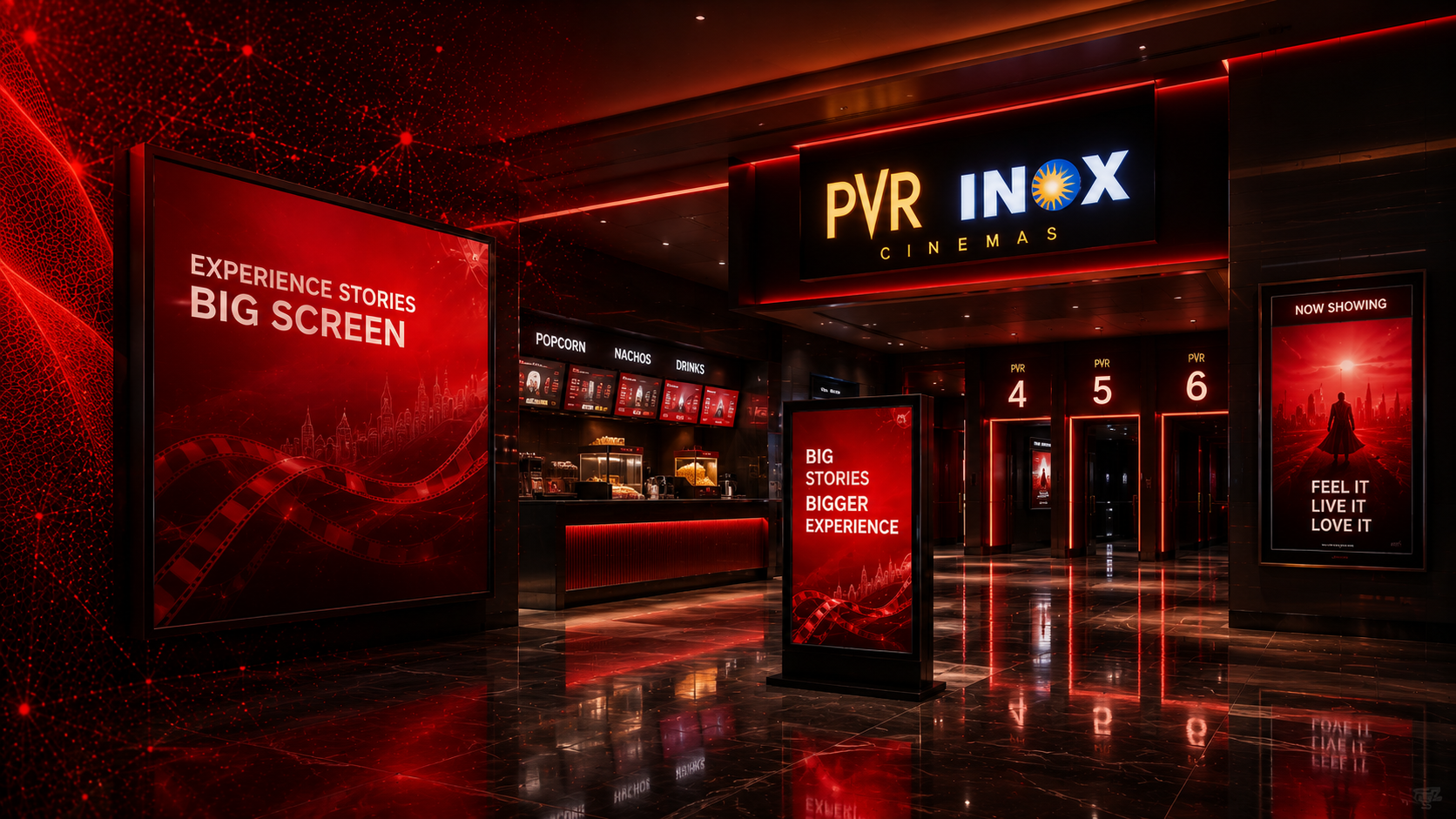
Compare Cinema Advertising Cost in India across major cinema chains, cities, individual screens, and advertising formats. Explore 10, 20, and 30-second ad costs, Regular, Blockbuster and Mega Blockbuster pricing, festive premiums, on-screen and off-screen advertising costs, and campaign budget requirements. Plan an effective cinema advertising campaign with a Cinema Advertising Agency in India based on your budget, target markets, and current screen availability.
Key Insights
Cinema Advertising Cost in India – Complete Cost & Budget Guide
Cinema advertising costs in India can start from around ₹1,000–₹2,000 for a 10-second advertisement on a selected screen for one week and can increase substantially for premium multiplexes, high-value screens, multiple cinema locations, blockbuster releases and large multi-city campaigns.
Unlike many other advertising mediums, cinema advertising does not have one standard national rate. On-screen advertising is commonly priced according to the ad duration, individual screen and campaign week. This means that the total cost depends on how many screens are selected, how long the advertisement is, how many weeks the campaign runs and whether the campaign coincides with a regular, blockbuster, mega-blockbuster or festive period.
For example, the PVR INOX FY 2025–26 rate card uses 10 seconds per screen per week as its base pricing unit. Across its 1,705 listed India screens, the average base rate is approximately ₹3,041 for 10 seconds per screen per week, although individual screen rates vary considerably according to cinema category, city, auditorium and other factors.
Cinepolis follows a different rate-card structure, with the supplied rate card quoting individual screen rates for a 30-second advertisement. Carnival Cinemas, meanwhile, provides separate 10-second weekly rates for regular, Blockbuster (BB), Mega Blockbuster (MBB) and festive periods.
This difference in pricing structures is important: advertisers should not compare cinema quotations only by looking at the headline rate. The pricing unit behind that rate must also be considered.
Cinema Advertising Cost at a Glance
|
Cinema Advertising Option |
Indicative Cost |
|
Standard On-Screen Advertising |
₹1,000 – ₹5,000+ per 10 sec/screen/week |
|
Premium On-Screen Advertising |
₹5,000 – ₹15,000+ per 10 sec/screen/week |
|
20-Second On-Screen Advertising |
Usually 2× applicable 10-sec rate |
|
30-Second On-Screen Advertising |
Usually 3× applicable 10-sec rate |
|
Blockbuster Movie Period |
Up to 50% premium on applicable base rate |
|
Mega Blockbuster Movie Period |
Up to 100% premium on applicable base rate |
|
Festive Period |
Higher rates may apply |
|
Digital Lobby Screens |
₹37,000 – ₹55,000+ per screen/month |
|
Seat Branding |
₹43,000 – ₹64,000+ per auditorium/month |
|
Product Kiosk |
₹5,000 – ₹16,000+ per day |
|
Wall Branding |
₹80,000 – ₹1.18 lakh+ per month |
|
Washroom Branding |
₹26,000 – ₹40,000+ per month |
|
Product Sampling |
Typically priced per sample/unit |
The actual Cinema Advertising Cost can fall below or above these indicative ranges depending on the cinema chain, city, multiplex, screen category, seating capacity, movie release, campaign duration and selected advertising format.
A Cinema Advertising Rate Is Not the Total Campaign Cost: If a cinema quotes ₹3,000 for 10 seconds per screen per week, this does not mean that a multi-screen campaign costs ₹3,000.
For example:
₹3,000 × 10 screens × 4 weeks = ₹1,20,000
For a 20-second advertisement on the same screens:
₹3,000 × 2 × 10 screens × 4 weeks = ₹2,40,000
A 30-second advertisement would increase the media requirement further.
Blockbuster, mega-blockbuster or festive premiums can then affect the applicable rate depending on the cinema chain and campaign tenure.
This is why Cinema Advertising Cost should always be evaluated as a complete campaign calculation rather than a single rate-card number. The number of screens, ad duration, campaign weeks and applicable premium together determine what the advertiser ultimately spends.
How Cinema Advertising Cost Is Calculated
The most important part of understanding Cinema Advertising Cost is knowing the unit on which the rate has been quoted. Cinema chains may quote advertising by screen, advertisement duration and campaign period, so two rates cannot be compared unless their pricing basis is the same.
For on-screen advertising, a commonly used calculation is:
Base Screen Rate × Ad Duration Multiple × Number of Screens × Number of Weeks = Media Cost
If the quoted base rate is for a 10-second advertisement per screen per week, a 20-second commercial normally requires twice the inventory and a 30-second commercial three times the inventory, subject to the cinema chain's applicable commercial policy.
Example: 10-Second Cinema Advertising Campaign
Consider a campaign where the applicable rate is ₹3,000 per 10 seconds per screen per week.
|
Campaign Requirement |
Calculation |
Cost |
|
1 Screen × 1 Week |
₹3,000 × 1 × 1 |
₹3,000 |
|
10 Screens × 1 Week |
₹3,000 × 10 × 1 |
₹30,000 |
|
10 Screens × 4 Weeks |
₹3,000 × 10 × 4 |
₹1,20,000 |
|
25 Screens × 4 Weeks |
₹3,000 × 25 × 4 |
₹3,00,000 |
|
50 Screens × 4 Weeks |
₹3,000 × 50 × 4 |
₹6,00,000 |
The calculation makes it possible to build a cinema campaign according to the available budget instead of treating the cinema chain as a single advertising property.
Effect of Advertisement Duration on Cost: If the applicable 10-second rate is ₹3,000, the equivalent media requirement for longer creatives would normally work as follows:
|
Ad Duration |
Rate Multiple |
Indicative Rate per Screen/Week |
|
10 Seconds |
1× |
₹3,000 |
|
20 Seconds |
2× |
₹6,000 |
|
30 Seconds |
3× |
₹9,000 |
Therefore, shortening a commercial from 30 seconds to 10 seconds can allow an advertiser to use the same budget across more screens or extend the campaign duration.
Screen Selection Changes the Total Cost: Cinema advertising is highly scalable because advertisers can select individual screens rather than necessarily purchasing every screen within a multiplex or cinema network.
For example, if the average selected screen costs ₹3,000 per 10 seconds per week, a four-week campaign across 10 screens would cost approximately ₹1.20 lakh. Expanding the same campaign to 50 screens would increase the media investment to approximately ₹6 lakh.
However, the actual screen rates do not remain identical. Premium auditoriums and high-value locations can command substantially higher rates than standard screens. This is why a campaign across 20 premium screens can sometimes cost more than a campaign covering a considerably larger number of standard screens.
Movie Release Can Change the Applicable Rate: The base calculation can also change when advertising is scheduled alongside high-demand movie releases.
Cinema rate cards may classify films or campaign periods as Regular, Blockbuster (BB) or Mega Blockbuster (MBB). Applicable premiums are then added to the normal screen rate.
For example, where a cinema chain applies a 50% Blockbuster premium, a regular rate of ₹4,000 becomes: ₹4,000 + 50% = ₹6,000
Where a 100% Mega Blockbuster premium applies: ₹4,000 + 100% = ₹8,000
The PVR INOX FY 2025–26 commercial policy specifically provides for 50% BB and 100% MBB premiums under the applicable campaign conditions.
The Practical Cost Formula: For budget planning, advertisers can therefore think of the complete on-screen Cinema Advertising Cost as:
Screen Rate × Ad Duration × Number of Screens × Campaign Weeks + Applicable BB/MBB/Festive Premiums
This pricing structure allows a cinema campaign to be adjusted in several ways. A fixed budget can be concentrated on fewer premium screens, distributed across a larger network of standard screens, used for a shorter high-impact campaign or extended over several weeks for greater repetition.
The lowest screen rate is therefore not necessarily the most economical campaign. The relevant comparison is how much screen coverage, campaign duration and advertising exposure the total budget can purchase.
Cinema Advertising Cost by Cinema Chain
Cinema Advertising Cost varies considerably between cinema chains because each network follows its own screen classification, rate structure, premium policy and inventory mix. PVR INOX, Cinepolis and Carnival Cinemas all price on-screen advertising at the individual screen level, but the base duration and premium structure are not identical.
For an accurate comparison, advertisers should first convert all quotations to the same basis before comparing one cinema chain with another.
|
Cinema Chain |
Base Pricing Structure |
Indicative Screen Cost |
Premium Structure |
|
PVR INOX |
10 sec/screen/week |
₹600 – ₹10,000+ |
BB, MBB & Festive |
|
Cinepolis |
30 sec/screen |
₹4,850 – ₹18,500+ in sampled inventory |
BB, MBB & Festive |
|
Carnival Cinemas |
10 sec/screen/week |
₹1,400 – ₹5,500+ in sampled Mumbai inventory |
Regular, BB, MBB & Festive |
These ranges illustrate the pricing structure visible in the supplied rate cards and should not be treated as one fixed national price for every screen.
PVR INOX Advertising Cost: PVR INOX uses a highly granular screen-level pricing structure. The FY 2025–26 rate card specifies separate rates for each auditorium according to city, cinema category, seating capacity and auditorium format. The base unit is 10 seconds per screen per week.
The supplied rate card also separates the year into:
Non-Festive Period: April–September and January–March
Festive Period: October–December
For example, selected PVR INOX screens in Guwahati show non-festive base rates from around ₹1,000 to ₹1,800 per 10 seconds per screen per week, while Patna screens shown in the rate card are around ₹2,100 per 10 seconds per screen per week.
The same screens become more expensive during the festive period. A Patna screen with a ₹2,100 non-festive base rate, for example, is listed at ₹2,520 during the festive period.
The rate card also applies different prices for Blockbuster and Mega Blockbuster weeks. A ₹2,100 regular non-festive screen rate becomes approximately: Regular: ₹2,100, Blockbuster: ₹3,150, Mega Blockbuster: ₹4,200
This means that the movie release calendar can materially affect the final Cinema Advertising Cost, even when the advertiser selects exactly the same auditorium.
Cinepolis Advertising Cost: The supplied Cinepolis rate card uses a 30-second screen rate, which is important when comparing it with chains quoting a 10-second rate.
Selected examples in the rate card include Cinepolis Guwahati at approximately ₹5,600–₹5,750 for 30 seconds, while selected Cinepolis Muzaffarpur screens range from approximately ₹6,400 to ₹7,500.
Premium inventory can cost considerably more. Cinepolis Patna, for example, includes a Platinum auditorium with a quoted rate of approximately ₹18,500 for 30 seconds. The same screen is listed at approximately ₹22,200 during the festive period.
Because the Cinepolis rate is based on 30 seconds, it should not be compared directly with a ₹2,000 or ₹3,000 10-second rate from another chain without first normalising the duration.
For example: ₹6,000 for 30 seconds ≈ ₹2,000 per 10-second equivalent
This makes cross-chain comparison more meaningful.
Cinepolis also has a defined premium policy. For campaigns shorter than four continuous weeks, the supplied policy applies a 50% premium during BB weeks and a 100% premium during MBB weeks. Longer continuous campaigns can have different treatment depending on how many blockbuster releases fall within the campaign tenure.
Carnival Cinemas Advertising Cost: Carnival Cinemas provides one of the clearest examples of how one screen can have several different advertising rates depending on the campaign period.
Its supplied rate card separately identifies: Non-Festive Regular Rate, Non-Festive BB Rate, Non-Festive MBB Rate, Festive Regular Rate, Festive BB Rate, Festive MBB Rate
For example, selected Carnival screens in Mumbai show regular non-festive rates ranging from approximately ₹1,400 to ₹5,500 per 10 seconds per screen per week. A Carnival IMAX auditorium carrying a regular rate of ₹5,500 increases to:
₹8,250 during a non-festive Blockbuster week
₹11,000 during a non-festive Mega Blockbuster week
During the festive period, the same screen rises further to: ₹6,600 Regular, ₹9,900 Blockbuster, ₹13,200 Mega Blockbuster
This demonstrates why a cinema campaign planned around a major film release or festive period can cost considerably more than the same number of screens booked during a regular week.
Why Chain-Wise Rates Should Not Be Compared Directly: A quotation such as PVR INOX – ₹3,000 & Cinepolis – ₹6,000 does not automatically mean Cinepolis is twice as expensive.
The first quotation may represent 10 seconds per screen per week, while the second may represent a 30-second rate.
Similarly, one quotation may refer to a standard auditorium while another applies to a Platinum, IMAX or other premium screen.
A meaningful cinema-chain comparison therefore requires matching:
Ad Duration + Screen + Cinema Category + City + Campaign Week + Regular/BB/MBB Status + Festive/Non-Festive Period
Only after these variables are aligned can the advertiser accurately determine which cinema chain offers the most suitable Cinema Advertising Cost for the campaign.
Cinema Advertising Cost by City
Cinema Advertising Cost can vary significantly from one city to another because cinema inventory, multiplex category, location, screen quality and audience potential are different across markets. Even within the same city, the rate can change substantially between a standard neighbourhood cinema and a premium multiplex located in a high-value shopping or commercial destination.
For budget planning, advertisers should therefore evaluate cinema costs at the city + cinema + individual screen level rather than applying one standard rate to an entire market.
|
City / Market |
Indicative Cinema Advertising Cost* |
|
Delhi NCR |
₹2,500 – ₹10,000+ |
|
Mumbai |
₹2,500 – ₹10,000+ |
|
Bengaluru |
₹2,000 – ₹8,000+ |
|
Hyderabad |
₹2,000 – ₹7,500+ |
|
Chennai |
₹2,000 – ₹7,500+ |
|
Kolkata |
₹1,500 – ₹6,000+ |
|
Pune |
₹2,000 – ₹6,000+ |
|
Ahmedabad |
₹1,500 – ₹5,000+ |
|
Chandigarh |
₹1,500 – ₹5,000+ |
|
Jaipur |
₹1,500 – ₹4,500+ |
|
Lucknow |
₹1,500 – ₹4,500+ |
|
Patna |
₹2,000 – ₹4,500+ |
|
Indore |
₹1,500 – ₹4,000+ |
|
Guwahati |
₹1,000 – ₹4,000+ |
|
Other Regional Markets |
₹1,000 – ₹4,000+ |
*Indicative base range for approximately 10 seconds per screen per week. Actual rates depend on the cinema chain, individual screen, cinema category, campaign period and applicable premiums.
Delhi NCR Cinema Advertising Cost: Delhi NCR represents one of India's largest cinema advertising markets, but there is no single Delhi NCR cinema rate.
An advertiser can select screens across Delhi, Noida, Greater Noida, Gurugram, Ghaziabad and Faridabad. Premium multiplexes and high-value locations can command substantially higher rates than standard screens.
A Delhi NCR campaign can therefore be built in very different ways: a brand may concentrate its budget on selected premium multiplexes or distribute the same investment across a larger network of standard screens.
Mumbai Cinema Advertising Cost: Mumbai also shows a wide variation in screen-level pricing.
The supplied Carnival rate card provides a useful example. Selected Mumbai screens carry regular non-festive rates from approximately ₹1,400 to ₹5,500 per 10 seconds per screen per week, depending on the auditorium.
The higher end includes premium formats such as IMAX, while standard screens can be available at substantially lower rates.
Importantly, the same Mumbai screen can become considerably more expensive during blockbuster, mega-blockbuster and festive periods. A ₹5,500 regular screen can increase to ₹11,000 during a non-festive Mega Blockbuster period and ₹13,200 when the Mega Blockbuster pricing coincides with the festive rate structure.
Patna Cinema Advertising Cost: Patna illustrates why regional markets should not automatically be treated as very low-cost cinema markets.
In the supplied PVR INOX rate card, selected Patna screens are approximately ₹2,100 per 10 seconds per screen per week during the regular non-festive period.
The Cinepolis rate card also shows considerable variation by auditorium category. Selected Cinepolis Patna inventory includes premium screens carrying substantially higher advertising rates than standard auditoriums.
This means that the Cinema Advertising Cost within Patna itself can vary according to whether the advertiser chooses standard or premium cinema inventory.
Guwahati Cinema Advertising Cost: Guwahati provides relatively accessible entry points in the supplied screen-level inventory.
Selected PVR INOX screens are available from approximately ₹1,000–₹1,800 per 10 seconds per screen per week during the regular non-festive period.
Cinepolis inventory follows its own pricing structure, with selected Guwahati screens quoted around ₹5,600–₹5,750 for a 30-second advertisement.
Once normalised to the same advertising duration, advertisers can compare the two options more accurately.
Metro Cities vs Regional Cities: Metro cities generally provide larger cinema networks and greater access to premium multiplex audiences, but this can result in higher Cinema Advertising Cost for the most desirable screens.
Regional markets can provide lower entry costs and make it possible to purchase a larger number of screens within the same budget.
However, this should not be treated as a universal rule.
A premium auditorium in a regional city can cost more than a standard auditorium in a metro market. The individual cinema and screen therefore remain more important than the city name alone.
City Selection Should Follow the Target Market: The cheapest city is not necessarily the best city for a cinema campaign.
A brand primarily selling in Delhi NCR gains little from purchasing cheaper cinema inventory in another market simply because the screen rate is lower. Conversely, a regional advertiser may not need expensive Mumbai or Delhi inventory when its customers are concentrated in Patna, Lucknow, Jaipur, Indore or another specific market.
The practical comparison is therefore:
City Relevance + Cinema Location + Screen Quality + Audience Potential + Number of Screens + Cinema Advertising Cost
This approach allows advertisers to determine where their budget can generate the most relevant cinema presence rather than simply identifying the lowest screen rate.
Cinema Advertising Cost by Format
Cinema advertising is not limited to advertisements shown before a movie. Brands can advertise both on-screen and within the cinema premises, and each format follows a different pricing model. While on-screen media is generally linked to ad duration, screen and campaign period, off-screen formats such as lobby screens, seat branding, kiosks and wall branding may be charged per screen, auditorium, location, day or month.
On-Screen Video Advertising Cost: Video commercials are the primary cinema advertising format. Pricing is generally determined by the duration of the advertisement, individual screen and number of campaign weeks.
For rate cards based on a 10-second unit, indicative costs can range from approximately ₹1,000–₹5,000+ per screen per week for standard screens, while premium screens can reach ₹10,000+ for the same base duration.
A 20-second or 30-second commercial requires proportionately more advertising inventory where the cinema chain follows duration-based pricing.
This makes video advertising highly scalable. A local advertiser can select a few screens in one city, while a national brand can purchase hundreds of screens across multiple cinema networks.
On-Screen Slide Advertising Cost: Static slides can provide a lower-production alternative to video commercials where the selected cinema or media package permits slide advertising.
The media cost depends on the screen and campaign period, while the creative requirement is simpler because the advertiser does not need to produce a full cinema commercial.
Availability and pricing should be confirmed for the selected cinema because the supplied rate cards do not establish one uniform slide-advertising rate applicable across all cinema chains.
Cinema Lobby Digital Screen Advertising Cost: Digital screens placed in cinema foyers and lobby areas provide additional exposure before and after the movie.
Unlike on-screen advertising, these displays may be priced per screen per month.
The supplied Cinepolis rate card lists digital plasma-screen advertising at approximately ₹37,000–₹55,000+ per screen per month, depending on the cinema category.
Lobby screens can be useful when advertisers want visibility beyond the auditorium and repeated exposure as moviegoers move through ticketing, waiting and concession areas.
Cinema Seat Branding Cost: Seat branding places the advertiser directly inside the auditorium and remains visible to moviegoers throughout their time around the selected seats.
The supplied Cinepolis rate structure indicates approximately ₹43,000–₹64,000+ per auditorium per month, depending on cinema category.
The total campaign investment can increase when multiple auditoriums or cinema properties are selected.
Product Kiosk Advertising Cost: Kiosks provide brands with physical space inside cinema premises for product displays, demonstrations, lead generation or customer interaction.
Unlike conventional screen advertising, kiosk space can be charged on a daily basis.
Based on the supplied Cinepolis rate card, indicative kiosk rates are approximately ₹5,000–₹16,000+ per day, depending on the cinema category and location.
A seven-day activation costing ₹10,000 per day would therefore represent approximately ₹10,000 × 7 days = ₹70,000 before fabrication, staffing or other activation expenses.
Product Sampling Cost: Cinema sampling allows advertisers to place product samples directly in the hands of moviegoers.
The supplied Cinepolis rate structure prices sampling according to the number of samples distributed, rather than using the conventional per-screen weekly pricing model.
This makes the total cost dependent primarily on the intended distribution volume. Product procurement, manpower and operational requirements may need to be budgeted separately depending on the campaign.
Cinema Wall Branding Cost: Wall branding converts selected cinema surfaces into larger-format brand displays and is generally purchased for longer campaign periods.
The supplied Cinepolis pricing indicates approximately ₹80,000–₹1.18 lakh+ per month for wall branding, depending on the cinema category.
Because wall locations differ in dimensions and passenger movement, advertisers should compare the actual branding area and location rather than evaluating only the monthly rate.
Cinema Washroom Branding Cost: Washroom branding provides another off-screen opportunity within the cinema environment.
Based on the supplied Cinepolis rate card, indicative pricing is approximately ₹26,000–₹40,000+ per month, depending on cinema category.
This format is generally used as supplementary cinema media rather than as a substitute for the main on-screen campaign.
On-Screen and Off-Screen Cinema Advertising Serve Different Purposes: The lowest-cost format is not automatically the most appropriate one.
On-screen advertising provides concentrated exposure when the audience is seated and focused on the cinema screen. Lobby digital media creates visibility during movement and waiting time. Seat and wall branding provide a physical brand presence, while kiosks and sampling enable direct consumer interaction.
A cinema campaign can therefore use one format independently or combine on-screen and off-screen media. The final Cinema Advertising Cost depends not only on how many cinemas are selected, but also on whether the advertiser wants screen exposure, physical branding, consumer engagement or a combination of all three.
What Determines Cinema Advertising Cost?
The Cinema Advertising Cost for two campaigns can be very different even when both use the same 10-second advertisement. This is because cinema media is priced at the individual screen level and the applicable rate changes according to the cinema, auditorium, campaign period and movie release.
Understanding these variables is important before comparing cinema advertising quotations.
Cinema Chain: Cinema chains maintain their own commercial structures and screen-level rate cards. PVR INOX, Cinepolis and Carnival, for example, do not necessarily quote advertising using exactly the same base duration or pricing structure.
A lower headline rate from one chain therefore does not automatically represent a cheaper campaign. The rate needs to be compared on an equivalent duration, screen and campaign-period basis.
Individual Cinema and Location: Advertising rates can vary between multiplexes operated by the same cinema chain.
A cinema located in a premium shopping mall, central business district or high-value residential catchment may have a different commercial value from another property in the same city.
For this reason, there is no single rate applicable to every PVR INOX, Cinepolis or other cinema in a city.
Screen Category: The auditorium selected can materially affect the cost.
The supplied rate cards differentiate between standard and premium cinema categories, while premium formats and experiences can carry higher advertising rates. Advertisers targeting premium moviegoing audiences should therefore evaluate the actual auditorium rather than only the cinema property.
Seating Capacity: Individual screens within the same multiplex can have different seating capacities. A large auditorium provides access to more moviegoers per show than a smaller auditorium when occupancy levels are comparable.
Seating capacity should therefore be considered alongside the screen rate when evaluating the potential audience available for the campaign.
Advertisement Duration: Cinema advertising costs increase with creative duration where pricing is duration-based.
If the applicable base unit is 10 seconds:
10 seconds = 1× base rate
20 seconds = 2× base rate
30 seconds = 3× base rate
A shorter commercial can therefore allow the same budget to cover more screens or additional campaign weeks.
Number of Screens: The total campaign investment increases as additional screens are selected.
However, advertisers have considerable flexibility because they do not necessarily need to purchase an entire cinema network. Individual screens can be shortlisted according to market, location, budget and campaign requirement.
This makes it possible to create anything from a highly localised cinema campaign to a large multi-city screen network.
Campaign Duration: Many on-screen cinema advertising rates are structured around a weekly campaign period.
A four-week campaign across the same screens will therefore require a larger investment than a one-week campaign, although the longer duration also provides repeated exposure to audiences attending different films and shows during the campaign.
Regular, Blockbuster and Mega Blockbuster Periods: The movie release calendar can significantly affect the applicable Cinema Advertising Cost.
The supplied PVR INOX commercial policy provides for a 50% premium for Blockbuster releases and a 100% premium for Mega Blockbuster releases under applicable conditions.
Therefore, a screen carrying a regular base rate of ₹4,000 could become:
Regular – ₹4,000, Blockbuster – ₹6,000 & Mega Blockbuster – ₹8,000
The advertiser is effectively paying a premium to advertise during periods when major movie releases can generate stronger cinema demand.
Festive Period: Some cinema rate cards also differentiate between festive and non-festive periods.
The supplied PVR INOX rate structure identifies October to December as the festive period, with higher base rates applicable to screens during these months.
The Carnival rate card goes further by providing separate Regular, BB and MBB rates for both festive and non-festive periods.
As a result, a campaign scheduled during a major movie release in the festive season can carry two layers of pricing impact: the festive base rate and the applicable movie-release premium.
The Same Screen Can Have Multiple Prices: This is one of the most important points when interpreting cinema rate cards.
An individual auditorium does not necessarily have one fixed advertising price throughout the year. The same screen can effectively have:
· Regular Non-Festive Rate
· Blockbuster Non-Festive Rate
· Mega Blockbuster Non-Festive Rate
· Regular Festive Rate
· Blockbuster Festive Rate
· Mega Blockbuster Festive Rate
The supplied Carnival rate card demonstrates this structure directly, with separate commercial rates for each of these campaign conditions.
Therefore, an accurate Cinema Advertising Cost cannot be determined from the cinema name alone. The final rate needs to be evaluated according to the specific cinema, individual screen, advertisement duration, campaign dates and movie-release classification selected for the campaign.
Regular vs Blockbuster vs Mega Blockbuster Cinema Advertising Cost
Cinema advertising rates can change according to the movie release scheduled during the campaign. Cinema chains may classify selected films as Regular, Blockbuster (BB) or Mega Blockbuster (MBB) and apply different advertising rates accordingly.
This means an advertiser booking exactly the same screen for exactly the same duration can pay a different Cinema Advertising Cost depending on the movie playing during that week.
How Blockbuster Premiums Affect Cost: The supplied PVR INOX FY 2025–26 commercial policy provides for a 50% premium for Blockbuster movies and a 100% premium for Mega Blockbuster movies under applicable campaign conditions.
Using a ₹3,000 base rate as an example:
|
Movie Classification |
Premium |
Cost per 10 Sec/Screen/Week |
|
Regular |
No Premium |
₹3,000 |
|
Blockbuster |
+50% |
₹4,500 |
|
Mega Blockbuster |
+100% |
₹6,000 |
Therefore, a 20-screen campaign running for one week would cost approximately ₹60,000 during a regular movie period, ₹90,000 during a Blockbuster period and ₹1.20 lakh during a Mega Blockbuster period, assuming the same ₹3,000 base rate.
Actual Screen-Level Pricing Shows the Difference: The supplied Carnival rate card makes this pricing difference particularly clear because Regular, BB and MBB prices are provided separately for individual screens.
For example, one premium Mumbai IMAX auditorium is listed at:
|
Campaign Period |
10 Sec/Screen/Week |
|
Regular – Non-Festive |
₹5,500 |
|
Blockbuster – Non-Festive |
₹8,250 |
|
Mega Blockbuster – Non-Festive |
₹11,000 |
|
Regular – Festive |
₹6,600 |
|
Blockbuster – Festive |
₹9,900 |
|
Mega Blockbuster – Festive |
₹13,200 |
The same advertising duration on the same auditorium can therefore range from ₹5,500 to ₹13,200 per week depending entirely on the campaign period and movie classification.
Festive Period Can Add Another Pricing Layer: Movie classification is not the only timing-related variable.
The supplied rate cards also distinguish between festive and non-festive campaign periods. In the PVR INOX FY 2025–26 rate structure, October to December is treated as the festive period, while April to September and January to March form the non-festive period.
The effect can be seen directly at screen level. A screen carrying a ₹2,100 regular non-festive base rate can move to approximately ₹2,520 during the festive period before any applicable BB or MBB premium is considered.
The campaign date therefore matters even when no other part of the media plan changes.
Blockbuster Pricing Can Change the Economics of a Large Campaign: The difference becomes more significant as the number of screens increases.
Consider 50 screens with a regular rate of ₹3,000 per 10 seconds per screen per week:
Regular: ₹3,000 × 50 = ₹1.50 lakh/week
Blockbuster: ₹4,500 × 50 = ₹2.25 lakh/week
Mega Blockbuster: ₹6,000 × 50 = ₹3 lakh/week
For a four-week campaign, this difference can materially affect the overall media budget.
Advertisers planning around major releases should therefore establish whether the quoted Cinema Advertising Cost is based on a regular week or already includes the applicable movie premium.
Longer Campaigns Need to Be Checked Differently: Blockbuster pricing should not automatically be applied to every week of a longer campaign.
The supplied Cinepolis commercial policy differentiates between campaigns of less than four continuous weeks and campaigns running for four continuous weeks or longer, with BB and MBB treatment depending on the campaign tenure and number of major releases occurring within it.
This makes the campaign period particularly important when comparing quotations. A four-week cinema plan containing one blockbuster release can have different commercial treatment from a one-week campaign purchased specifically for that blockbuster.
Regular Weeks Can Offer More Screen Coverage for the Same Budget: Major movie releases can provide access to periods of stronger cinema demand, but the premium also reduces the number of screens that a fixed budget can purchase.
For example, with a ₹3 lakh weekly budget and a ₹3,000 regular screen rate, an advertiser could theoretically purchase:
· Regular Period – 100 screens
· Blockbuster Period at ₹4,500 – approximately 66 screens
· Mega Blockbuster Period at ₹6,000 – 50 screens
The planning decision is therefore not simply whether a blockbuster movie attracts more moviegoers. The advertiser must decide whether the campaign benefits more from higher-demand movie weeks or broader screen coverage at regular rates.
For this reason, movie-release classification and campaign dates should be checked before finalising the Cinema Advertising Cost, rather than treating blockbuster premiums as an unexpected additional charge after the screen plan has already been selected.
Cinema Advertising Cost for 10, 20 and 30-Second Ads
The duration of the commercial has a direct impact on Cinema Advertising Cost. Where the cinema rate card is based on a 10-second unit, longer advertisements require proportionately more inventory.
A 20-second commercial generally requires twice the inventory of a 10-second commercial, while a 30-second commercial requires three times the inventory, subject to the applicable cinema chain's commercial policy.
Cost Comparison by Ad Duration
|
Base 10-Sec Screen Rate |
10-Second Ad |
20-Second Ad |
30-Second Ad |
|
₹1,000 |
₹1,000 |
₹2,000 |
₹3,000 |
|
₹2,000 |
₹2,000 |
₹4,000 |
₹6,000 |
|
₹3,000 |
₹3,000 |
₹6,000 |
₹9,000 |
|
₹5,000 |
₹5,000 |
₹10,000 |
₹15,000 |
|
₹7,500 |
₹7,500 |
₹15,000 |
₹22,500 |
|
₹10,000 |
₹10,000 |
₹20,000 |
₹30,000 |
The figures above represent the equivalent media cost per screen per week where the applicable cinema pricing is based on a 10-second unit. They do not include BB, MBB, festive or other applicable premiums.
10-Second Cinema Advertising Cost: A 10-second commercial provides the lowest duration-based entry point for video advertising where the cinema chain follows a 10-second pricing structure.
If 25 screens are selected at an average rate of ₹3,000 per screen per week: ₹3,000 × 25 screens = ₹75,000 per week
For four weeks: ₹75,000 × 4 = ₹3 lakh
A short creative can therefore allow an advertiser to distribute the available budget across more screens without reducing the campaign duration.
20-Second Cinema Advertising Cost: A 20-second advertisement provides more time for product demonstration, storytelling, offers or brand communication, but it also increases the media requirement.
Using the same ₹3,000 base rate across 25 screens: ₹3,000 × 2 × 25 = ₹1.50 lakh per week
For four weeks: ₹1.50 lakh × 4 = ₹6 lakh
The advertiser is therefore choosing between additional creative duration and the opportunity to use the same budget for more screens.
30-Second Cinema Advertising Cost: A 30-second commercial requires three 10-second units where duration is calculated proportionately.
At a ₹3,000 base rate across 25 screens: ₹3,000 × 3 × 25 = ₹2.25 lakh per week
For four weeks: ₹2.25 lakh × 4 = ₹9 lakh
However, not every cinema rate card starts with a 10-second unit. The supplied Cinepolis rate card, for example, quotes its on-screen inventory using a 30-second advertising rate. When comparing Cinepolis with a cinema chain quoting a 10-second rate, the durations should therefore be normalised before deciding which option is more economical.
Same Budget, Different Creative Duration: The impact becomes clearer when the advertiser starts with a fixed budget rather than a fixed number of screens.
Assume a weekly budget of ₹3 lakh and an average base rate of ₹3,000 per 10 seconds per screen:
|
Creative Duration |
Approx. Screens Within ₹3 Lakh/Week |
|
10 Seconds |
100 Screens |
|
20 Seconds |
50 Screens |
|
30 Seconds |
33 Screens |
The advertiser can therefore use the same ₹3 lakh to purchase either shorter exposure across a wider screen network or longer exposure across fewer screens.
This is an important cinema media planning decision because a longer advertisement is not automatically more effective. If the message can be communicated clearly in 10 seconds, the budget saved on duration can be used to increase the number of screens, markets or campaign weeks.
Conversely, products that require explanation, storytelling or detailed communication may benefit from a longer creative even if this reduces overall screen coverage.
The appropriate duration should therefore be selected by balancing creative requirement, number of screens, campaign duration and total Cinema Advertising Cost, rather than automatically choosing the longest available advertisement.
Premium Screens vs Wider Cinema Network: Where Should You Spend?
A cinema advertising budget can be concentrated on a smaller number of premium screens or distributed across a larger network of standard screens. Both approaches can work, but they serve different campaign objectives.
The decision should therefore not be based only on the lowest Cinema Advertising Cost per screen. Advertisers need to consider what they receive from the complete screen plan.
Premium Screen Strategy: A premium-screen strategy concentrates the campaign budget on selected high-value cinemas and auditoriums.
These may include premium multiplex locations, high-category cinemas and special-format auditoriums such as IMAX or other premium experiences where available.
Suppose an advertiser has a ₹5 lakh weekly budget and the selected premium screens average ₹10,000 per 10 seconds per screen per week.
The approximate coverage would be: ₹5,00,000 ÷ ₹10,000 = 50 screens
This strategy can make sense when the campaign prioritises specific premium cinema locations rather than maximum screen count.
Wider Screen Network Strategy: The same ₹5 lakh budget can produce a very different campaign when allocated to standard screens.
If selected screens average ₹2,500 per 10 seconds per screen per week: ₹5,00,000 ÷ ₹2,500 = 200 screens
The advertiser could therefore theoretically cover four times as many screens for the same media investment.
The trade-off is straightforward: instead of concentrating the budget on a smaller premium inventory pool, the campaign achieves substantially broader screen distribution.
Comparing the Two Approaches
|
₹5 Lakh Weekly Budget |
Premium Strategy |
Wider Network Strategy |
|
Assumed 10-Sec Rate |
₹10,000 |
₹2,500 |
|
Approx. Screens |
50 |
200 |
|
Primary Objective |
Selective Presence |
Wider Coverage |
|
Geographic Spread |
More Concentrated |
Can Be Broader |
|
Screen Selection |
Premium Inventory |
Standard Inventory |
|
Best Suited For |
Focused targeting |
Scale and coverage |
These figures illustrate budget allocation rather than fixed market rates. Actual screen selection depends on the available inventory and applicable rate card.
When Premium Screens Can Make More Sense: Paying a higher screen rate can be justified when the selected cinemas are particularly important to the campaign.
For example, an advertiser may deliberately prioritise a smaller set of cinemas because they are located in strategically important catchments or because the campaign requires premium auditorium inventory.
In this situation, reducing the Cinema Advertising Cost per screen is not necessarily the objective. The advertiser is intentionally paying more to concentrate the campaign on selected locations.
When More Screens Can Make More Sense: A wider network can be more appropriate when the objective is to increase geographic coverage or build visibility across a larger number of cinema locations.
FMCG, consumer electronics, telecom, entertainment, apps, e-commerce and other mass-market campaigns may prefer to distribute the available budget across a broader screen network rather than concentrate heavily on a few expensive auditoriums.
Regional campaigns can follow the same principle by purchasing multiple standard screens across the target city or state.
A Third Option is The Balanced Screen Planning: The choice does not have to be exclusively premium or standard. A campaign can combine both.
For example, part of the budget can be allocated to strategically important premium cinemas, while the remaining investment is distributed across lower-cost standard screens to maintain scale.
A ₹10 lakh campaign could therefore use: Premium screens for selective high-value locations + Standard screens for broader market coverage
This creates a balance between concentration and reach without requiring the entire campaign to follow one screen category.
Compare Cost Against the Screen Plan, Not the Screen Rate: A ₹2,000 screen is not automatically better value than a ₹6,000 screen, and a ₹10,000 premium screen is not automatically more effective than several lower-priced screens.
The useful comparison is:
Total Budget → Selected Markets → Cinema Locations → Screen Mix → Campaign Duration → Advertising Exposure
This is why Cinema Advertising Cost should ultimately be assessed at the campaign level. The objective is not to purchase the cheapest individual screen, but to build the most appropriate combination of screens that the available advertising budget can support.
Cinema Advertising Budget Guide
The number of screens a brand can purchase depends on the available budget, selected cities, cinema chain, ad duration, campaign period and individual screen rates. This makes Cinema Advertising Cost flexible enough for both local campaigns covering a few selected screens and large campaigns running across multiple cities.
The estimates below use 10-second advertising as the reference point. Actual screen selection should be calculated from the applicable rate card.
₹50,000–₹1 Lakh Cinema Advertising Budget: A budget of ₹50,000–₹1 lakh can be used for a focused cinema campaign across selected screens in one city.
At an average rate of ₹2,500 per 10 seconds per screen per week, ₹1 lakh could theoretically purchase approximately: 40 screens for one week or 10 screens for four weeks
The advertiser therefore has a choice between short-term wider coverage and sustained visibility across fewer screens.
This budget can be practical for local businesses, education, healthcare, real estate projects, restaurants, retail stores and city-specific promotions.
₹1–₹3 Lakh Cinema Advertising Budget: A ₹1–₹3 lakh budget provides greater flexibility in screen selection.
At an average ₹3,000 screen rate, a ₹3 lakh budget could purchase approximately: 100 screens for one week or 25 screens for four weeks
Alternatively, the advertiser can select fewer premium screens or use a combination of standard and premium cinema inventory.
This budget is suitable for stronger city-level campaigns and selected regional market campaigns.
₹3–₹5 Lakh Cinema Advertising Budget: With ₹3–₹5 lakh, advertisers can begin building a broader cinema network.
At an average ₹3,000 per 10 seconds per screen per week, ₹5 lakh could theoretically provide approximately: 166 screens for one week or 41 screens for four weeks
The campaign can also be divided between multiple locations within the same city rather than concentrating entirely on one multiplex.
For brands with a clearly defined geographic market, this budget can provide meaningful screen coverage without requiring a national campaign.
₹5–₹10 Lakh Cinema Advertising Budget: A ₹5–₹10 lakh cinema advertising budget provides enough flexibility to consider multiple cinema locations, a larger screen network or selected multi-city coverage.
At an average ₹3,000 rate, ₹10 lakh represents approximately: 333 screen-weeks of 10-second advertising.
That could theoretically be structured as approximately: 83 screens for four weeks or 166 screens for two weeks or 333 screens for one week.
The actual campaign could contain fewer screens if premium multiplex inventory, longer commercials or blockbuster periods are selected.
₹10–₹25 Lakh Cinema Advertising Budget: At ₹10–₹25 lakh, advertisers can consider larger multi-city cinema campaigns.
Instead of selecting screens only on the basis of price, the budget can be allocated strategically between major markets, regional cities and premium cinema properties.
For example, the campaign could use higher-priced screens in Delhi NCR and Mumbai while purchasing broader screen coverage in lower-cost markets.
This level of investment also allows advertisers to combine standard screens with selected premium auditoriums rather than choosing exclusively between the two.
₹25 Lakh+ Cinema Advertising Budget: A ₹25 lakh+ budget can support extensive cinema advertising across multiple cities and cinema networks.
At this level, planning becomes more important than simply increasing the number of screens. The advertiser needs to determine how much of the investment should be allocated to metro markets, regional markets, premium screens, standard screens, campaign duration and major movie releases.
Large campaigns can also combine on-screen advertising with off-screen formats such as lobby digital media, seat branding, kiosks, sampling or other cinema activation opportunities.
Budget Alone Does Not Determine Screen Coverage: A ₹5 lakh campaign does not always purchase the same number of screens.
For example, assuming 10-second weekly rates:
|
Average Screen Rate |
Approx. Screen-Weeks from ₹5 Lakh |
|
₹1,500 |
333 |
|
₹2,500 |
200 |
|
₹3,000 |
166 |
|
₹5,000 |
100 |
|
₹7,500 |
66 |
|
₹10,000 |
50 |
A screen-week means one selected screen running for one week. Therefore, 100 screen-weeks could represent 100 screens for one week, 50 screens for two weeks or 25 screens for four weeks.
This is a more useful way to evaluate Cinema Advertising Cost because it shows exactly how the available budget translates into campaign scale.
Blockbuster, Mega Blockbuster and festive premiums can reduce the number of screen-weeks available within the same budget, while standard screens and regular campaign periods can allow the advertiser to purchase broader coverage.
The appropriate cinema advertising budget should therefore be determined by the number of markets, screen quality, required coverage, creative duration and campaign period, rather than setting a budget without first understanding what that investment can realistically purchase.
How to Choose Cinema Screens Within Your Budget
Selecting cinema screens should not begin with the question, “Which cinema has the lowest rate?” A better starting point is to identify the market the campaign needs to reach and then determine which combination of cinemas and screens provides the most relevant coverage within the available Cinema Advertising Cost.
Two campaigns with the same budget can produce very different media plans. One may use a small number of premium screens, while another may cover several multiplexes and a much larger screen network.
Start with the Market, Not the Cinema Chain: The first decision should be geographic. If a campaign is focused on Delhi NCR, the advertiser should determine which parts of Delhi, Gurugram, Noida, Ghaziabad or Faridabad are commercially important before selecting individual cinemas.
For a multi-city campaign, the budget should first be divided between priority markets. Cinema selection can then take place within each city.
This prevents the campaign from accumulating inexpensive screens in locations that have limited relevance to the brand.
Look at the Individual Cinema Location: Two properties belonging to the same cinema chain can serve very different catchment areas.
A multiplex located inside a premium shopping destination may attract a different audience from a cinema serving a predominantly residential neighbourhood. The commercial value of the screen therefore depends partly on where the cinema is located and the audience the advertiser intends to reach. This is why chain name alone should not determine screen selection.
Check the Actual Auditorium: Cinema advertising is ultimately delivered inside individual auditoriums. Advertisers should examine the screen category and seating capacity rather than assuming every screen within a multiplex offers identical exposure.
The supplied cinema rate cards show that individual auditoriums within the same property can carry different advertising rates. Premium categories and special-format screens can also command higher rates than standard auditoriums.
The correct comparison is therefore between specific screens, not simply between multiplex names.
Decide How Much Coverage Is Required: The advertiser then needs to decide whether the campaign objective is concentrated visibility or broader coverage.
For example, assume two possible plans:
|
Plan |
Screens |
Average 10-Sec Rate |
Weekly Cost |
|
Premium Concentration |
20 |
₹8,000 |
₹1,60,000 |
|
Wider Coverage |
60 |
₹2,500 |
₹1,50,000 |
Both require a similar weekly investment, but they create fundamentally different campaigns.
The first concentrates the budget on selected higher-priced screens. The second provides three times the screen coverage. The appropriate choice depends on where the brand's target audience is concentrated.
Consider the Movie Calendar Before Finalising Screens: A screen that fits the budget during a regular week may exceed the planned cost when a Blockbuster or Mega Blockbuster premium applies. Advertisers should therefore check the movie-release calendar alongside the screen rate.
This becomes particularly important when a campaign is planned for several weeks because different films can affect the applicable commercial structure during the campaign period.
A screen plan should not be finalised using regular rates if the intended campaign dates fall within premium movie periods.
Evaluate Festive Timing: Campaign timing can also affect the available screen budget. The supplied rate cards differentiate between festive and non-festive periods, with higher rates applicable during specified festive months.
If the objective does not require a festive-season campaign, moving the activity to a regular pricing period may allow the same budget to purchase additional screens or extend the campaign duration.
If festive visibility is strategically important, the higher Cinema Advertising Cost should instead be incorporated into the media plan from the beginning.
Balance Screen Count with Campaign Duration: A fixed budget can be used to maximise the number of screens or the number of campaign weeks. For example, 100 screen-weeks could be structured as:
100 screens for 1 week or 50 screens for 2 weeks or 25 screens for 4 weeks
All three plans purchase the same number of screen-weeks but create different patterns of coverage and repetition.
A product launch may benefit from concentrated screen coverage over a shorter period, while an ongoing brand campaign may prefer fewer screens running for several weeks.
Do Not Select Screens Only by Rate: A ₹1,500 screen should not automatically be selected over a ₹3,000 screen simply because it is cheaper.
The lower-priced screen is useful only if its cinema location and audience are relevant to the campaign.
Similarly, there is little value in paying a premium for an expensive auditorium if the campaign does not specifically require that location or screen category.
The practical screen-selection process should therefore consider:
Target Market → Cinema Location → Individual Auditorium → Screen Category → Seating Capacity → Movie Period → Campaign Duration → Screen Rate → Available Budget
The objective is to use the available Cinema Advertising Cost to build the most relevant screen network rather than simply purchasing the maximum possible number of screens.
Understanding Cinema Ad Exposure
The value of a cinema campaign is determined not only by the number of screens purchased but also by how frequently the advertisement is scheduled to appear on each screen. This makes exposure frequency an important part of evaluating Cinema Advertising Cost.
Under the supplied PVR INOX FY 2025–26 commercial policy, the standard advertising exposure is three spots per auditorium per day. This provides a useful way to translate a screen booking into scheduled advertising plays.
How Cinema Ad Exposure Is Calculated
For a campaign receiving three spots per screen per day:
3 Spots per Day × 7 Days = 21 Scheduled Spots per Screen per Week
The number increases directly with the size of the screen network.
|
Number of Screens |
Spots per Day |
Approx. Spots per Week |
|
1 |
3 |
21 |
|
10 |
30 |
210 |
|
25 |
75 |
525 |
|
50 |
150 |
1,050 |
|
100 |
300 |
2,100 |
|
250 |
750 |
5,250 |
Therefore, a campaign covering 100 screens for one week at the standard three-spots-per-day exposure would generate approximately 2,100 scheduled advertising plays.
Exposure Across a Four-Week Campaign
Campaign duration increases repetition without necessarily increasing the number of screens.
For example: 50 screens × 3 spots/day × 7 days × 4 weeks = 4,200 scheduled advertising plays
A 100-screen campaign running for four weeks would produce approximately: 100 × 3 × 7 × 4 = 8,400 scheduled advertising plays
This demonstrates the difference between screen count and advertising exposure. A campaign does not simply appear once on each selected screen.
Screen-Weeks and Ad Plays Measure Different Things: These two measurements should not be confused.
Screen-Weeks measure how much cinema inventory has been purchased.
For example: 50 screens × 4 weeks = 200 screen-weeks
Scheduled Ad Plays measure how often the advertisement is scheduled to run.
At three spots per screen per day: 200 screen-weeks × 21 spots = 4,200 scheduled plays
Using both measurements gives advertisers a clearer understanding of what their cinema media investment represents.
Cost per Scheduled Ad Play: The same calculation can also help put the media rate into perspective.
Suppose a screen costs ₹3,000 per 10 seconds per week and provides 21 scheduled spots during that week.
The approximate media cost per scheduled play would be: ₹3,000 ÷ 21 = ₹143 per play
If 100 screens are purchased at the same assumed rate: Media Cost = ₹3,00,000, Scheduled Plays = 2,100 and Approximate Media Cost per Scheduled Play = ₹143
This does not represent cost per viewer because actual audience size depends on attendance and occupancy. It simply expresses the media investment against the number of scheduled advertising plays.
Ad Plays Should Not Be Presented as Audience Reach: A scheduled cinema ad play and an advertising impression are not the same thing.
One play may be viewed by dozens or hundreds of moviegoers depending on the auditorium size and occupancy for that particular show. Consequently:
2,100 scheduled plays ≠ 2,100 viewers: The potential audience is influenced by the number of people present when each advertisement runs.
For this reason, cinema campaign evaluation should distinguish between number of screens, scheduled ad plays and estimated audience exposure rather than combining them into a single number.
Exposure Policies Can Differ by Cinema Chain: The three-spots-per-day example above reflects the supplied PVR INOX commercial policy and should not automatically be applied to every cinema network.
Other cinema chains or advertising packages may follow different scheduling arrangements. Advertisers should therefore confirm the applicable exposure policy when comparing quotations from different cinema networks.
A meaningful Cinema Advertising Cost comparison should consider not only the price per screen but also how many times the advertisement is scheduled to run during the booked campaign period.
Additional Costs Beyond Cinema Advertising Rates
The quoted Cinema Advertising Cost generally represents the media inventory being purchased. Depending on the campaign format, advertisers may also need to budget for creative production, technical processing, certification, fabrication or execution. These costs should be considered separately when calculating the complete campaign investment.
Creative Production: Brands using an existing cinema-ready commercial may not require a new production budget. However, advertisers creating a commercial specifically for cinema need to account for video production and post-production costs separately from the screen media rate.
The production budget can vary significantly depending on whether the campaign uses a simple adapted video or a completely new commercial involving a shoot, actors, animation, voice-over, music and advanced post-production.
Creative Adaptation: An existing television or digital commercial may require adaptation before it can be supplied for cinema exhibition.
The requirement depends on the technical specifications prescribed by the selected cinema network. Advertisers should therefore obtain the applicable creative specifications before preparing the final master rather than assuming that an existing digital file can be used without modification.
Certification and Content Approval: Cinema advertisements are subject to applicable content, certification and approval requirements before they can be exhibited.
The required documentation and process should be confirmed before the campaign start date because an advertisement that has not completed the necessary approval process may not be scheduled for exhibition.
Technical or Processing Charges: Some cinema campaigns may involve separate technical, conversion, ingestion or processing charges for preparing and distributing the advertisement across the selected cinema network.
These charges are different from the screen media rate and should be identified separately in the final quotation where applicable.
Off-Screen Production and Fabrication: Physical cinema advertising formats can involve additional execution expenditure.
Seat branding requires production and installation of the branding material. Wall branding requires printing and mounting. Product kiosks may require fabrication, transportation and setup. Sampling campaigns may require manpower, product logistics and distribution arrangements.
The media-space charge therefore does not necessarily represent the complete cost of an off-screen activation.
Taxes: Applicable taxes are generally calculated separately from the basic media and execution charges and should be included when determining the final payable campaign amount.
Calculate the Complete Campaign Investment
Advertisers should therefore distinguish between the media cost and the total executed campaign cost.
For an on-screen campaign, the calculation can broadly be understood as: On-Screen Media Cost + Creative / Adaptation Cost + Applicable Technical or Processing Charges + Applicable Taxes
For an off-screen campaign: Media Space Cost + Printing / Fabrication + Installation / Manpower / Logistics, where required + Applicable Taxes
Not every campaign will incur every additional charge. A brand supplying an approved, cinema-ready commercial may have fewer execution expenses than an advertiser creating a new commercial or installing a physical activation.
For this reason, quotations for Cinema Advertising Cost should clearly identify what is included in the media rate and what will be charged separately. This prevents a low headline screen rate from being mistaken for the complete campaign budget.
How Cinema Advertising Is Booked
Cinema advertising is booked at the individual cinema and screen level. The process starts with defining the campaign market and budget, followed by selecting cinema chains, properties, screens, campaign dates and creative duration. Availability and the applicable movie-release pricing are then checked before the campaign is confirmed.
Define the Campaign Requirement: The advertiser should first establish the cities to be covered, approximate budget, campaign duration and advertisement length.
For example, a campaign brief could specify: Delhi NCR and Mumbai + 10-second commercial + 4-week campaign + ₹10 lakh media budget
This gives the media planner a clear basis for identifying the number and type of screens that can realistically be purchased.
Select Cinema Chains and Locations: The next stage is to identify suitable cinema networks and individual properties within the target markets.
The selection does not need to be restricted to one cinema chain. A campaign can combine PVR INOX, Cinepolis and other available cinema networks when this provides a more appropriate geographic or budget fit.
The cinema location should be evaluated before individual screens are shortlisted because different multiplexes within the same city serve different catchment areas.
Select Individual Screens: Once cinema properties are shortlisted, the advertiser can select the individual auditoriums.
The media plan should clearly specify the cinema name, location, screen number or category, applicable rate and campaign period.
This is important because rates can vary between individual screens within the same multiplex.
Confirm Regular, BB or MBB Pricing: The campaign dates should then be matched against the applicable movie-release classification.
A screen available at its regular rate may carry a higher Cinema Advertising Cost during a Blockbuster or Mega Blockbuster period. Festive pricing may also apply according to the cinema chain's commercial policy.
The applicable rate should therefore be confirmed against the actual campaign dates rather than calculated only from the standard base rate.
Check Screen Availability: Cinema advertising inventory is subject to availability. The selected screens should be checked for the required campaign dates before the final media plan is approved. If a preferred screen is unavailable, another auditorium within the same property or an alternative cinema can be considered.
Finalise the Media Plan: The final media plan should clearly show what the advertiser is purchasing.
A practical plan normally identifies: City → Cinema Chain → Cinema Property → Screen → Ad Duration → Campaign Weeks → Applicable Rate → Total Media Cost
This makes it possible to verify the complete Cinema Advertising Cost rather than approving a quotation based only on an overall campaign amount.
Submit the Cinema-Ready Creative: After the screen plan is confirmed, the advertisement needs to be supplied according to the technical and approval requirements applicable to the selected cinema network.
The creative duration should match the inventory purchased. A campaign booked for 10 seconds, for example, requires a creative that fits the purchased duration.
Any applicable certification, technical processing or content approval requirements should also be completed before scheduling.
Campaign Scheduling and Execution: Once the commercial and approvals are in place, the advertisement is scheduled across the booked screens for the confirmed campaign period.
Where the applicable package follows the PVR INOX standard exposure referenced in the supplied rate card, advertising is scheduled at three spots per auditorium per day. Exposure policies can differ across cinema chains and should therefore be confirmed for the selected inventory.
For off-screen formats such as seat branding, lobby media, kiosks, wall branding or sampling, execution can additionally involve production, installation, fabrication, manpower or logistics.
Booking Should Be Based on the Final Screen Plan: A cinema campaign should not be considered booked simply because a city-level or chain-level rate has been received.
The final confirmation should establish exactly which screens are included, for how many weeks, at what creative duration, under which movie classification and at what applicable rate.
This creates a transparent link between the quoted Cinema Advertising Cost and the actual cinema inventory the advertiser receives.
Role of a Cinema Advertising Agency
Cinema advertising requires more than selecting a cinema chain and deciding how many screens to book. Rates can differ by city, cinema property, individual auditorium, screen category, advertisement duration, movie release and campaign period. A Cinema Advertising Agency helps advertisers convert these variables into a screen-level media plan that fits the campaign objective and available budget.
Screen-Level Media Planning: An agency can shortlist cinema properties and individual screens according to the markets the advertiser wants to cover.
Instead of purchasing screens simply because they have lower rates, the plan can prioritise cinemas based on location, screen category, seating capacity and relevance to the target market.
This becomes particularly useful for large campaigns where hundreds of available screens need to be evaluated across multiple cities.
Comparing Cinema Chains on the Same Pricing Basis: Cinema-chain quotations cannot always be compared directly because their rate structures can differ.
One cinema chain may quote a 10-second rate per screen per week, while another may provide a rate based on a longer advertising duration. An agency can normalise these rates to a common duration and campaign period before comparing the actual Cinema Advertising Cost.
This prevents a lower headline quotation from being selected simply because its pricing unit is different.
Planning Around Movie Releases: The movie calendar can materially change cinema media costs.
A Cinema Advertising Agency can identify whether the proposed campaign period includes Regular, Blockbuster or Mega Blockbuster releases and calculate the applicable premiums before the campaign is approved.
This is particularly important for campaigns planned around major releases, when the same screen can carry a significantly higher rate than during a regular week.
Budget Allocation Across Screens and Cities: For multi-city campaigns, an equal budget allocation is not always the most efficient approach.
A ₹20 lakh campaign, for example, does not necessarily need ₹5 lakh allocated equally across four cities. A larger share can be assigned to strategically important markets, while lower-cost screens can provide broader coverage in other cities.
An experienced Cinema Advertising Agency in India can therefore structure the campaign around market priority rather than simply dividing the budget evenly.
Premium and Standard Screen Mix: Cinema media planning also involves deciding how much of the budget should be invested in premium inventory.
A campaign can concentrate on selected premium auditoriums, purchase a larger network of standard screens or combine both.
The agency's role is to show the advertiser how each option changes the number of screens, campaign duration and overall media investment before the final selection is made.
On-Screen and Off-Screen Planning: Cinema campaigns can extend beyond on-screen commercials.
Where available, an agency can combine on-screen advertising with lobby digital screens, seat branding, wall branding, kiosks, product displays, sampling and other activation opportunities.
These formats follow different pricing structures, so the complete campaign budget needs to separate screen media from physical branding, fabrication, manpower and other execution requirements.
Campaign Coordination and Execution: After the media plan is approved, the agency coordinates screen availability, commercial confirmation, creative specifications, applicable approvals, scheduling and campaign execution.
For campaigns running across several cinema chains and cities, this provides the advertiser with one coordinated media plan instead of separately managing multiple cinema properties.
The role of a Cinema Advertising Agency in India is therefore to connect screen selection, rate comparison, movie-release planning, budget allocation and execution. The objective is not simply to obtain cinema inventory, but to ensure that the available Cinema Advertising Cost is converted into a relevant and commercially practical screen plan.
Get Cinema Advertising Plan
Cinema advertising rates vary according to the city, cinema chain, multiplex, individual screen, auditorium category, advertisement duration, campaign period and movie release. The costs mentioned in this guide provide a practical benchmark for budget planning, while the final Cinema Advertising Cost is determined by the specific screens available for the required campaign dates.
As a Cinema Advertising Agency, The Media Spaces helps brands compare screen-level advertising options, evaluate Regular, Blockbuster and Mega Blockbuster rates, and select suitable cinemas according to the target market and available budget. For multi-city campaigns, The Media Spaces works as a Cinema Advertising Agency in India, coordinating cinema selection, media planning and campaign execution across different cinema networks and markets.
Share your target cities, preferred cinema locations, campaign duration, ad length and approximate budget to receive current screen availability, applicable cinema advertising costs and a customised screen-level media plan.
Get a Cinema Advertising Plan customised to your campaign objective and budget.
Email us at enquiry@themediaspaces.com
Frequently Asked Questions (FAQ's)
-
How much does cinema advertising cost in India?
Cinema Advertising Cost in India can start from approximately ₹1,000–₹2,000 per 10 seconds per screen per week for selected standard screens and can exceed ₹10,000 for premium screens. The total campaign cost depends on the cinema chain, city, individual auditorium, ad duration, number of screens, campaign period and applicable Blockbuster, Mega Blockbuster or festive premiums.
-
How is cinema advertising priced?
On-screen cinema advertising is commonly priced according to advertisement duration × individual screen × campaign period. For rate cards using a 10-second weekly unit, a ₹3,000 screen rate means ₹3,000 for a 10-second advertisement on that screen for one week, not ₹3,000 for the entire multiplex.
-
How much does a 10-second cinema ad cost?
A 10-second cinema advertisement can typically cost approximately ₹1,000–₹5,000+ per screen per week for standard inventory, while selected premium screens can cost ₹10,000 or more. Actual rates vary considerably by screen and campaign period.
-
How much does a 30-second cinema ad cost?
Where the cinema rate is based on a 10-second unit, a 30-second advertisement generally requires three units. Therefore, a screen costing ₹3,000 for 10 seconds would represent approximately ₹9,000 for 30 seconds per screen per week, subject to the cinema chain's commercial policy. Some cinema chains may quote a 30-second rate directly, so the base pricing unit should always be checked before comparing quotations.
-
Is cinema advertising charged per screen or per multiplex?
On-screen cinema advertising can be purchased at the individual screen level. Different auditoriums within the same multiplex may have different advertising rates depending on screen category, seating capacity and other commercial factors. This allows advertisers to select specific screens instead of necessarily purchasing every auditorium in a multiplex.
-
How many times does a cinema advertisement play per day?
The frequency depends on the cinema chain and advertising package. Under the supplied PVR INOX FY 2025–26 commercial policy, the standard exposure is three spots per auditorium per day. At this frequency, one selected screen provides approximately 21 scheduled advertising plays per week. Other cinema networks may follow different exposure policies.
-
Does cinema advertising cost more during blockbuster movies?
Yes, where the applicable cinema-chain policy uses movie-release premiums. The supplied PVR INOX commercial policy provides for a 50% premium for Blockbuster releases and a 100% premium for Mega Blockbuster releases under applicable campaign conditions. For example, a ₹4,000 regular screen rate could increase to approximately ₹6,000 for a Blockbuster and ₹8,000 for a Mega Blockbuster.
-
Are cinema advertising rates higher during festive periods?
They can be. The supplied PVR INOX FY 2025–26 rate structure treats October to December as the festive period, with higher base rates for applicable screens. Some rate cards also combine festive pricing with separate Regular, BB and MBB rates, meaning the same screen can have several different prices during the year.
-
What is the minimum budget for cinema advertising?
There is no single compulsory minimum budget applicable across all cinema campaigns. Because individual screens can be selected, relatively focused campaigns can be planned with budgets starting around ₹50,000–₹1 lakh, depending on the city, screens, duration and campaign period. Larger multi-city or premium-screen campaigns can require budgets running into several lakhs or crores.
-
Can I advertise in only one cinema?
Yes, subject to inventory availability and the commercial conditions of the selected cinema network. Advertisers can build highly local campaigns around selected cinema properties rather than purchasing a city-wide or national cinema package.
-
Can I choose individual cinema screens?
Yes. Screen-level rate cards allow advertisers to shortlist individual auditoriums according to location, screen category, seating capacity, rate and available budget. This is particularly useful when an advertiser wants specific cinemas without paying for less relevant screens elsewhere in the network.
-
Is PVR INOX advertising more expensive than other cinema chains?
Not necessarily. PVR INOX has both standard and premium inventory, and its screen-level rates vary considerably. A standard PVR INOX screen can cost less than a premium auditorium operated by another cinema chain. A fair comparison should use the same ad duration, city, screen category, campaign period and movie classification rather than comparing only cinema-chain names.
-
Which is cheaper: a 10-second or 30-second cinema advertisement?
A 10-second advertisement generally requires less media inventory than a 30-second commercial where pricing is duration-based. For the same budget, using a shorter creative can therefore allow the advertiser to purchase more screens or additional campaign weeks. A longer commercial may be preferable when the campaign requires more detailed storytelling or product communication.
-
How much does off-screen cinema advertising cost?
Off-screen costs depend on the format. Based on the supplied cinema rate-card inventory, indicative pricing can range from approximately ₹5,000–₹16,000+ per day for product kiosks, ₹37,000–₹55,000+ per month for lobby digital screens, ₹43,000–₹64,000+ per auditorium per month for seat branding, and ₹80,000–₹1.18 lakh+ per month for wall branding. Production, fabrication, manpower and installation can be additional depending on the format.
-
Is GST included in Cinema Advertising Cost?
Taxes should be checked in the final quotation. Media rates and additional execution charges may be quoted before applicable taxes, so advertisers should distinguish between the basic media rate and the final payable campaign amount.
-
Can a Cinema Advertising Agency manage campaigns across India?
Yes. A Cinema Advertising Agency can plan campaigns across different cinema chains, cities and individual screens. A Cinema Advertising Agency in India can also coordinate screen selection, rate comparison, movie-release premiums, creative requirements, scheduling and execution for multi-city campaigns.
-
How can I get the current Cinema Advertising Cost?
Current pricing should be checked against the required city, cinema chain, individual screen, ad duration, campaign dates and movie-release classification. Cinema rate cards and available inventory can change, so indicative costs are useful for budget planning while the final campaign cost should be calculated from the screens available for the required dates.